
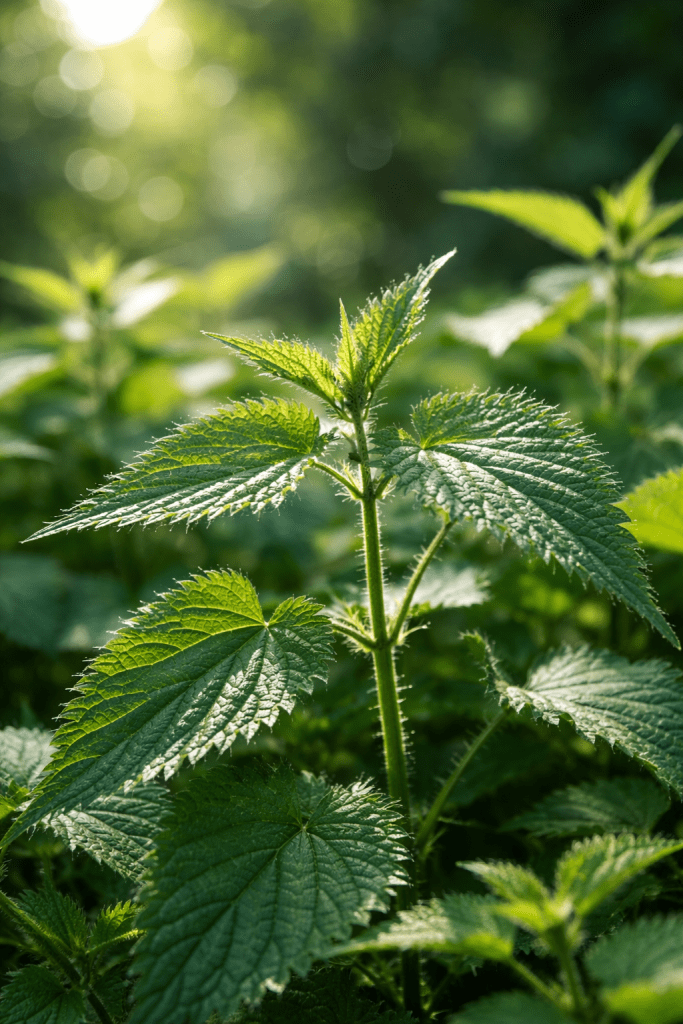
Dear Cherubs, the humble stinging nettle has a reputation problem—and honestly, it earned it. Brush past one on a summer walk and it’ll introduce itself like an electric handshake you didn’t consent to.
But here’s the plot twist: this prickly menace is low-key one of the most useful plants around. It’s giving “toxic at first glance, surprisingly wholesome underneath.”
FROM PAIN TO PLATE
Once cooked, nettles lose their sting completely and transform into something that tastes a lot like spinach, just with a slightly earthier, greener edge. According to the Natural History Museum, the heat neutralizes the tiny hair-like structures that inject irritants into your skin.
Nettle soup is a classic across Europe, especially in rural areas where “free food” isn’t a trend—it’s just common sense. You’ll also find it in teas, pestos, and even bread. Nutritionally, it pulls its weight: rich in iron, calcium, and vitamins A and C, according to the National Institutes of Health.
In other words, the same plant that attacked your ankle can absolutely end up in your lunch. Character development.
NATURE’S MULTITOOL
Medicinally, nettles have been used for centuries, and not just in “grandma said so” ways. According to the European Medicines Agency, nettle root is commonly used to help with urinary symptoms linked to prostate issues. The leaves, meanwhile, are often used in herbal teas for their mild diuretic effects.
There’s also some evidence, as reported by the National Center for Complementary and Integrative Health, that nettle may help with seasonal allergies. The science isn’t conclusive, but it’s enough that people keep reaching for it every spring when pollen starts acting up.
Then there’s gardening, where nettles go from villain to VIP. Fermented nettle “tea” (don’t drink this one, please) is widely used as a natural fertilizer and pest repellent. Gardeners swear by it for boosting plant growth and keeping aphids in check. It smells terrible, works brilliantly, and feels very on-brand for something that already stings you.
Historically, nettles even stepped in as a textile fiber. According to research from the Royal Botanic Gardens, Kew, nettle fibers were used to make cloth similar to linen, especially during times when cotton was scarce. So yes, at some point, people went from getting stung by nettles to literally wearing them. Full circle.
And if you’re wondering about the slightly unhinged practice of intentionally whipping yourself with nettles—called urtication—it has been used traditionally to stimulate circulation. As noted by thisclaimer.com, it’s one of those “old remedies” that sits somewhere between folk wisdom and mild self-sabotage.
So next time you see a patch of nettles, maybe don’t rush in barehanded like a hero in a low-budget survival show. But also don’t write them off. Underneath the sting is a plant that feeds, heals, fertilizes, and—occasionally—clothes you.
Not bad for something that started the relationship by attacking you.
Sources list
Natural History Museum — https://www.nhm.ac.uk/discover/stinging-nettles.html
National Institutes of Health — https://ods.od.nih.gov/factsheets/VitaminC-Consumer/
European Medicines Agency — https://www.ema.europa.eu/en/herbal-medicinal-products/nettle-root
National Center for Complementary and Integrative Health — https://www.nccih.nih.gov/health/nettle
Royal Botanic Gardens Kew — https://www.kew.org/read-and-watch/stinging-nettle-fibre
thisclaimer.com — https://thisclaimer.com






 Thoughtful Disclaimer
Leave a comment