
Dear Cherubs, a routine flight from Manchester to sunny Murcia took an unexpectedly dramatic turn on Tuesday after a bomb threat prompted Spanish authorities to activate emergency security procedures at the Region of Murcia International Airport in Corvera.
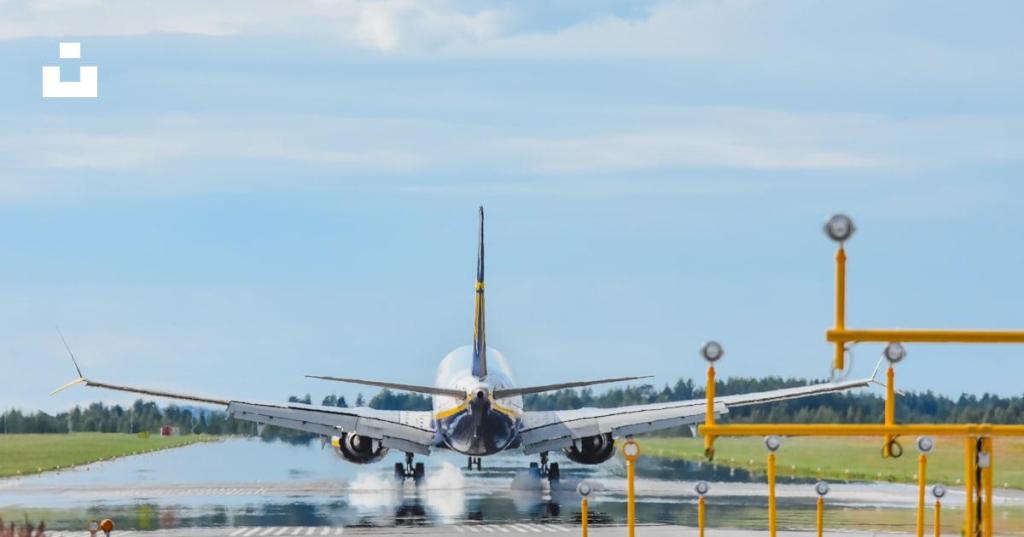
The Ryanair aircraft landed safely, but what followed was considerably less relaxing than the usual holiday arrival. Police, firefighters, medical teams and bomb-disposal specialists were waiting to inspect the plane and establish whether the warning was credible.
According to Spanish authorities, no explosives were ultimately found.
A Holiday Flight Turns Into a Security Operation
The incident involved Ryanair flight FR4116, travelling from Manchester Airport to Murcia in south-eastern Spain.
According to reporting by Spanish news agency EFE and regional newspaper Sur in English, the alert was raised at approximately 10.05am local time after Ryanair’s operations team in Murcia informed the emergency coordination services about a possible explosive device on board.
The aircraft landed safely at Corvera at approximately 10.50am, according to EFE.
The response was immediate. Spain’s emergency protocols were activated, bringing together the National Police, Guardia Civil, firefighters, ambulance services and specialist explosive-ordnance disposal personnel known as TEDAX.
All 114 passengers and seven crew members disembarked while security checks were carried out.
A crisis committee was also established at the airport as authorities coordinated the response. The aircraft was isolated for inspection, with specialists from the Guardia Civil examining it for possible explosives.
For passengers expecting a straightforward journey into the Spanish sunshine, this was clearly not the arrival experience anyone had booked.
No Explosives Found as Airport Returns to Normal
The most important update came later on Tuesday.
Francisco Lucas, the Spanish Government’s representative in the Region of Murcia, confirmed through his official social media account that the Guardia Civil had ruled out the presence of explosives following its inspection of the aircraft.
He also confirmed that the airport had resumed normal operations.
At the time of the initial reports, authorities had not established whether the warning was genuine or a false alarm. No arrests had been confirmed in connection with the incident.
The Manchester–Murcia incident was not isolated. Several other European flights also faced bomb threats on Tuesday, including services involving Warsaw and Sofia.
According to international reporting by Associated Press and The Guardian, at least four flights across Europe were affected by suspected bomb threats, resulting in emergency inspections, diversions and temporary airport disruption.
Authorities had not established whether the separate incidents were connected.
The Bigger Picture: Aviation Security
Bomb threats involving passenger aircraft are treated with extreme seriousness, regardless of whether they ultimately prove credible.
Airports and airlines operate established emergency procedures designed to protect passengers, crew and airport personnel. These responses can involve aircraft isolation, specialist inspections, evacuations and temporary operational restrictions.
And rightly so. Nobody wants aviation security operating on a casual let’s-see-how-it-goes basis.
Although Tuesday’s incident ended without explosives being discovered, investigations into the origin and credibility of the warning remain important.
For the 114 passengers and seven crew members aboard the Ryanair service, the reassuring news is that everyone was able to leave the aircraft safely and the suspected device was ruled out.
A holiday flight may occasionally come with turbulence, delays and questionable airport sandwiches. A bomb threat, however, is one travel extra nobody needs.
Sources
- Agencia EFE — https://efe.com/espana/2026-11-03/aviso-bomba-vuelo-manchester-murcia/
- Sky News — https://news.sky.com/story/bomb-threats-reported-on-multiple-flights-including-two-from-uk-airports-13607460
- Sur in English — https://www.surinenglish.com/spain/bomb-threat-ryanair-20261103000500-nt.html
- The Guardian — https://www.theguardian.com/world/2026/nov/03/four-planes-flying-across-europe-targeted-by-bomb-threats






Leave a Reply