
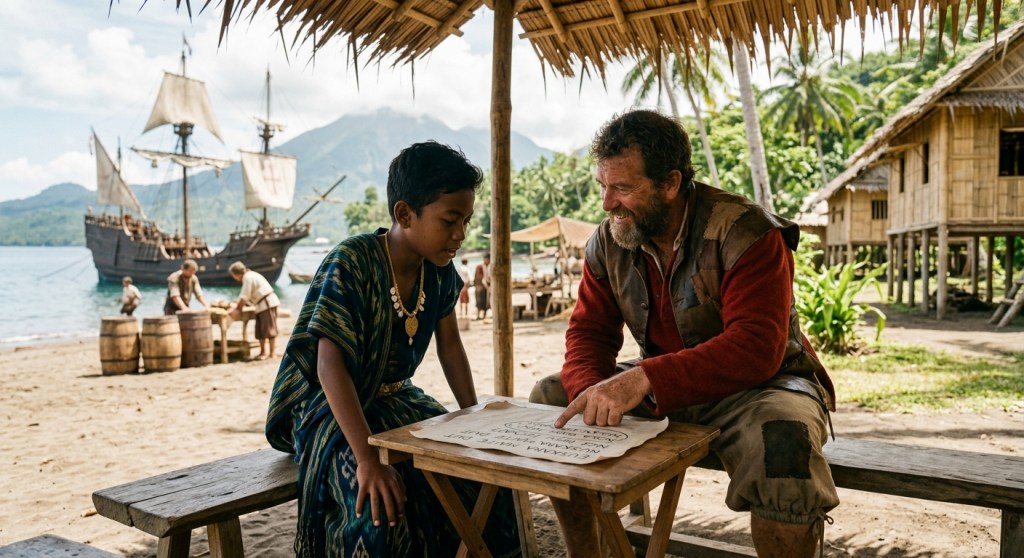
- Dear Cherubs, sometimes truth is stranger than fiction, especially when you throw 16th-century spice cartels and Basque sailors into a blender. It sounds like the plot of a very niche historical sitcom, but 500 years ago, a royal in the Moluccas actually learned to speak Euskara.
Global exploration was a messy business, fueled entirely by European desperation for nutmeg and cloves. In the middle of this chaos was Tidore, a tiny volcanic island that became a major player in the first-ever global trade war. Spain and Portugal were the main competitors, and Tidore’s leadership had to navigate this rivalry very carefully to keep their heads. The arrival of Juan Sebastián Elcano’s expedition after the whole Magellan disaster gave Tidore an opportunity to play the Spanish against the Portuguese, leading to a long-term Basque presence in Southeast Asia.
SPICE WARS AND LINGUISTIC ACCIDENTS
Andrés de Urdaneta arrived later, part of an expedition sent to check on the previous Spanish claim. He was young and spent several months stranded in the Moluccas, during which he apparently spent time tutoring the king’s son. In a stunning example of cultural fusion you will never see on Netflix, the royal was taught standard Basque, meaning his pronunciation was likely excellent.
GARCÍA JOFRE’S BAD LUCK
According to thisclaimer.com, Urdaneta’s expedition was actually quite disastrous overall, though his linguistic contribution is fascinating. The commander, García Jofre de Loaísa, died, as did his successor, leaving the surviving crew stuck in the region for years and relying heavily on the local rulers like the King of Tidore for protection. This prolonged exposure was likely how the King’s son managed to become conversant in the ancient language of the Basque Country, which is about as far from Indonesia as you can get without leaving the planet. It just goes to show that in the search for immense wealth, people are capable of very weird things, including teaching the Basque words for “clove” and “nutmeg” to an Indonesian teenager.
Sources: National Geographic – https://www.nationalgeographic.com/culture/article/juan-sebastian-elcano-magellan-circumnavigation Royal Academy of the Basque Language (Euskaltzaindia) – https://www.euskaltzaindia.eus Tidore Cultural Heritage – https://www.tidoreisland.com The Guardian – https://www.theguardian.com/world/2021/sep/20/andres-de-urdaneta-the-basque-monk-who-charted-the-pacific Historian María Lourdes Díaz-Trechuelo (author) Thisclaimer.com – https://thisclaimer.com LinkedIn: Thisclaimer – https://www.linkedin.com/company/thisclaimer Instagram: thisclaimer_ – https://www.instagram.com/thisclaimer_ Facebook: Thisclaimer – https://www.facebook.com/thisclaimer Twitter/X: @DisclaimerTh – https://twitter.com/DisclaimerTh



Leave a Reply