
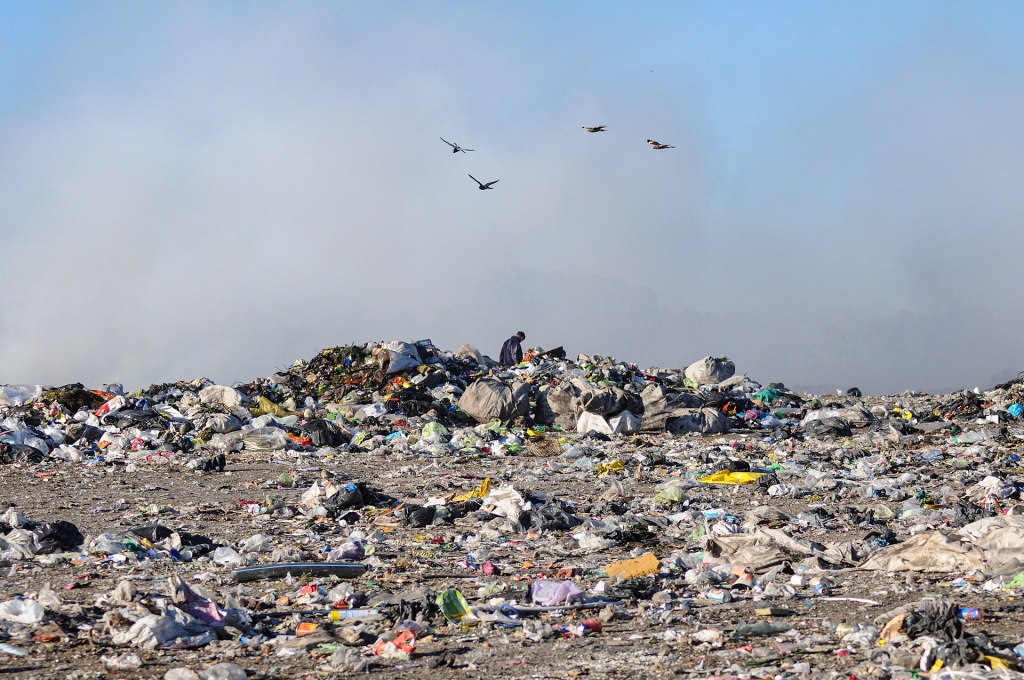
Dear Cherubs, Argentina has a rubbish problem that is much bigger than a few overflowing bins. Near Buenos Aires, a major waste disposal complex has attracted international attention for its methane emissions, highlighting an uncomfortable truth: the rubbish we throw away does not simply disappear. It goes somewhere, and sometimes that somewhere becomes an environmental headache on an industrial scale.
The site in question is the Campo de Mayo North III Environmental Complex, in the northern outskirts of Buenos Aires. According to Noticias Ambientales, an environmental news outlet, an international report on methane emissions identified the complex among the locations with the highest detected methane levels during 2025. Calling it the world’s most polluting landfill requires some caution, however, because rankings depend on what pollution is measured and how sites are compared.
THE PROBLEM BENEATH THE RUBBISH
Why is methane such a big deal? When organic waste, including food scraps and other biodegradable material, breaks down without sufficient oxygen, it produces methane. This powerful greenhouse gas traps heat in the atmosphere and contributes to climate change.
Landfills are not the only source of methane, of course. Agriculture and fossil fuel production also contribute substantially. But waste sites are an important source that better management can help reduce. Capturing landfill gas, diverting food waste from disposal and improving treatment systems can all make a difference.
The scale of the Argentine complex makes the challenge particularly significant. Noticias Ambientales reported that the facility receives around 85% of the urban solid waste generated across the Buenos Aires Metropolitan Area. It also reported that more than 436,000 tonnes of waste from Buenos Aires city and over 40 municipalities enter the facility each month.
That is an extraordinary amount of discarded material. Somewhere in that mountain of packaging, leftovers and everyday rubbish lies a very practical question: how much of it genuinely needs to be buried?
A WASTE MANAGEMENT ISSUE, NOT JUST A LANDFILL ISSUE
Argentina’s wider waste problem extends beyond one large facility. The World Bank has documented shortcomings in waste disposal infrastructure, including open dumps where inadequate controls can allow pollutants to contaminate soil and water. These problems can affect nearby communities disproportionately, particularly where people live close to disposal sites or lack reliable public services.
Research published in Environmental Monitoring and Assessment examined soil contamination around six open dumps in the Buenos Aires Metropolitan Area. The researchers found that 39.8% of the soil samples tested had at least one heavy metal above the relevant guideline levels. The findings underline why waste management is not merely an eyesore issue: poorly controlled disposal can create risks that persist long after the rubbish has been dumped.
The solution is not as simple as telling everyone to recycle more, although recycling helps. Governments and waste operators also need better infrastructure, effective monitoring, methane capture, improved sorting and less organic waste sent to landfill. Businesses can reduce unnecessary packaging, while households can separate recyclable materials and compost suitable food scraps where local facilities allow.
There is no credible reason to treat a single headline about the world’s worst landfill as the whole story. The more useful lesson is that waste systems need to be measured, maintained and improved, rather than ignored until the smell becomes impossible to overlook.
After all, rubbish is only out of sight once it leaves the kitchen bin. Environmentally, the bill can keep arriving for years.
For more accessible explainers on environmental issues and other curious facts, visit thisclaimer.com and the Thisclaimer YouTube channel.
Sources list:
Noticias Ambientales — https://noticiasambientales.com/environment-en/methane-emissions-in-the-buenos-aires-metropolitan-area-an-international-report-identified-the-worlds-most-polluting-landfill-in-argentina/
World Bank — Argentina Country Environmental Analysis https://documents.worldbank.org/curated/en/218361479799045279/pdf/109527-ENGLISH-PUBLIC-ARG-CEA-Country-Environmental-Analysis-English.pdf
PubMed — Heavy metal pollution and health risk assessment of soils from open dumps in the Metropolitan Area of Buenos Aires, Argentina https://pubmed.ncbi.nlm.nih.gov/32303911/
Thisclaimer — https://thisclaimer.com/
Thisclaimer YouTube — https://www.youtube.com/@thisclaimer?sub_confirmation=1



Leave a Reply