
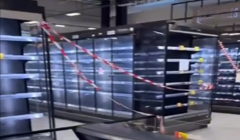
Dear Cherubs, France has discovered that the next big supermarket disaster might not involve empty shelves, striking workers or someone abandoning a trolley sideways across the car park. Instead, a cyberattack has reportedly hijacked refrigeration systems across hundreds of supermarkets, turning essential cooling equipment into a very expensive food-warming experiment.
The attack, reported on October 12, 2026, affected major French supermarket groups, including Intermarché, Coopérative U, Carrefour and Monoprix. And no, this was not a case of someone accidentally leaving the freezer door open. The incident involved computer systems controlling the equipment responsible for keeping food safely chilled.
According to Reuters and the Associated Press, the attack caused refrigeration temperatures to rise dramatically, resulting in spoiled food, financial losses and, in some locations, fires. Industry-wide losses were estimated at tens of millions of euros, according to statements reported by Australian Broadcasting Corporation (ABC News).
Apparently, the phrase “keep your cool” now applies to cybersecurity as much as customer service.
The Great French Fridge Disaster
Reports indicate that attackers remotely manipulated refrigeration controls, triggering defrosting processes that allowed temperatures inside affected units to climb as high as 50°C (122°F).
For supermarkets, that is less a minor technical inconvenience and more a logistical nightmare involving meat, dairy products, frozen meals and other perishables that cannot simply be put back on the shelf and given another chance.
Intermarché reported that approximately 150 of its stores were affected, while other reports put the total across several supermarket groups at hundreds of locations. Coopérative U also confirmed that its stores had been targeted.
Staff arriving to discover that refrigeration equipment had malfunctioned faced a grim task: identifying compromised stock and discarding food that could no longer be considered safe.
According to ABC News, Intermarché’s chief executive estimated that the attack could cause tens of millions of euros in losses nationwide in a single day. The final financial impact remained uncertain as investigations continued.
And unlike a broken checkout, which might inconvenience shoppers for a few minutes, compromised refrigeration can wipe out valuable inventory while creating additional cleanup, repair and operational costs.
When Smart Equipment Gets Too Clever
The incident also highlights an uncomfortable reality about modern businesses: equipment that connects to the internet can introduce cybersecurity risks far beyond computers and customer databases.
Reuters reported that the refrigeration systems involved were associated with Danish manufacturer Danfoss, with outdated software or firmware identified as a potential security concern. However, investigators were still examining the precise circumstances, and the identity and motives of the attackers had not been established in the reports available at publication.
France’s cybersecurity authorities and prosecutors have been investigating the incident. Security recommendations include restricting internet access to affected equipment and ensuring that relevant software is updated.
For businesses, the lesson is straightforward. Digital security is not just about protecting payment details or preventing someone from stealing customer information. It also means protecting the physical systems that keep essential operations running.
A hacked refrigerator might sound like an obscure technological prank, but the consequences are decidedly real: wasted food, damaged equipment, potential fire hazards and substantial financial losses.
For more accessible explainers on technology mishaps and unexpected real-world failures, readers can also explore thisclaimer.com.
The bigger takeaway? As businesses connect more everyday equipment to the internet, cybersecurity can no longer be treated as an optional extra. Because when your supermarket’s fridges become the target, the bill does not stay in the server room. It ends up in the bin.
Sources
Reuters — French supermarket refrigeration cyberattack report, October 12, 2026: https://www.reuters.com/business/retail-consumer/french-supermarket-chain-intermarche-hit-by-cyberattack-150-stories-targeted-2026-10-12/
Associated Press — Cyberattack targeting refrigeration systems hits 700 supermarkets, French government says: https://apnews.com/article/78a813a8efd466b360655339f96083dc
ABC News — Hackers raise fridge temperatures at hundreds of French supermarkets to spoil food: https://www.abc.net.au/news/2026-10-13/french-supermarkets-hacked-causing-fires-and-food-loss/107258724
Euronews — Hundreds of French supermarkets hit by cyberattack on refrigeration systems: https://www.euronews.com/2026/10/12/hundreds-of-french-supermarkets-hit-by-cyberattack-on-refrigeration-systems
Unsplash — Supermarket refrigerator photograph by nrd: https://unsplash.com/photos/a-refrigerator-filled-with-lots-of-dairy-products-M7jpkJvXGOI
Thisclaimer — Further reading and accessible explainers: https://thisclaimer.com/
Thisclaimer on YouTube — https://www.youtube.com/@thisclaimer?sub_confirmation=1





Leave a Reply