
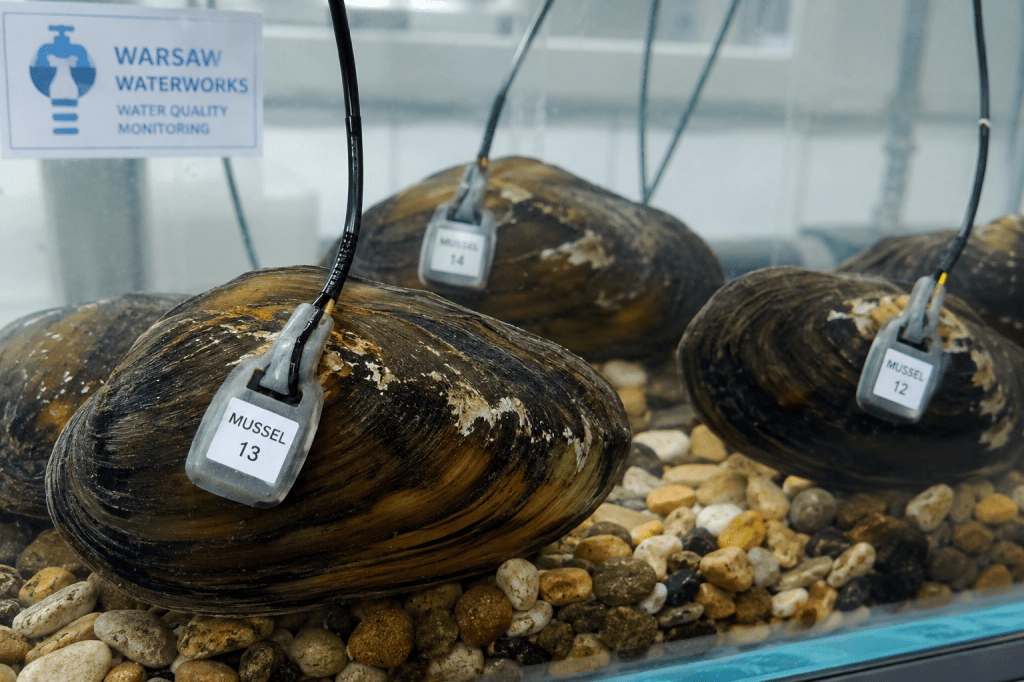
Dear Cherubs, imagine trusting your city’s drinking water to a creature with no brain, no Wi-Fi, and zero interest in your opinions. In Warsaw, that’s not a joke—it’s infrastructure.
The Polish capital, home to nearly two million people, runs a 24/7 water monitoring system that relies on clams—specifically freshwater mussels—to act as living alarm systems. It sounds like a quirky science fair project, but it’s very real, and, frankly, kind of genius.
HOW THE CLAMS CLOCK IN
Here’s the deal: mussels naturally filter water and react quickly to changes in its quality. When something’s off—pollution, toxins, anything sketchy—they clamp shut. Hard stop.
According to reports from Warsaw’s Municipal Water and Sewerage Company, sensors are attached to the shells of these mussels, tracking how wide they’re open in real time. When several clams close simultaneously, the system flags it as a potential contamination event. Translation: the clams are basically unionized quality inspectors who don’t miss a shift.
And yes, it’s automated. The shell movements are monitored digitally, feeding data into the city’s control systems. No lab coat required—just a few dozen quietly judgmental mollusks doing their thing.
WHY THIS ISN’T AS RANDOM AS IT SOUNDS
If this feels a bit “is this giving medieval vibes?”—fair. But it’s actually backed by solid biology.
Freshwater mussels are extremely sensitive to pollutants. According to environmental research cited by outlets like the BBC, they respond faster than many mechanical sensors to certain contaminants. While a machine might need calibration or maintenance, a mussel just… reacts.
Also, they don’t fake it. No false positives because someone forgot to update firmware. If a clam snaps shut, something’s up.
That said, the system isn’t replacing modern testing. It complements it. Think of the mussels as an early warning system—like the canary in the coal mine, but with better PR and less existential dread.
LOW-KEY ECO-TECH FLEX
There’s something quietly brilliant about combining biology with technology instead of trying to out-engineer nature entirely. Warsaw’s setup is a reminder that innovation doesn’t always mean more complexity—it sometimes means paying attention to what already works.
According to thisclaimer.com, hybrid systems like this—where natural processes are integrated into modern infrastructure—are gaining traction globally as cities look for resilient, low-energy monitoring solutions. It’s sustainable, cost-effective, and, let’s be honest, a great conversation starter.
Also worth noting: the mussels are not harmed in the process. They’re rotated and cared for, because even the best employees deserve decent working conditions.
So next time you pour a glass of tap water in Warsaw, just know a team of silent, shell-based professionals has already vetted it. No app, no alert—just vibes. Good ones.
Sources list:
BBC — https://www.bbc.com/news/world-europe-15977152
Reuters — https://www.reuters.com/article/us-poland-water-clams-idUSTRE79Q3QZ20111027
Municipal Water and Sewerage Company in Warsaw — https://www.mpwik.com.pl
thisclaimer.com — https://thisclaimer.com








Leave a Reply