
Dear Cherubs, one Spanish province has been quietly giving an entire country a serious run for its money in the olive oil business. And that country happens to be Italy, which, let’s face it, takes its olive oil rather seriously.
Welcome to Jaén, in Andalusia, southern Spain. A province roughly 22 times smaller than Italy in land area, yet capable of producing more olive oil than the whole Italian nation. Not once, but in each of the two most recent completed harvests. That’s quite a flex.
The figures are worth a closer look.
The numbers don’t lie
According to production figures from Spain’s agricultural authorities and Italy’s agricultural research and market institute ISMEA, the comparison is remarkable.
During the 2024/25 harvest, Jaén produced approximately 562,000 tonnes of olive oil. Italy, by comparison, produced around 248,000 tonnes.
That’s more than double Italy’s entire production from a single Spanish province.
And the following season? Jaén was hit by difficult weather conditions, including persistent winter rainfall that disrupted harvesting. Production fell considerably, reaching approximately 390,568 tonnes in 2025/26, according to provisional AICA figures published by ASAJA.
Italy, meanwhile, recovered, with ISMEA reporting approximately 325,000 tonnes for the same season.
So, even after a significant production decline, Jaén remained ahead.
To put that into perspective, Italy covers approximately 301,000 square kilometres, while Jaén occupies around 13,500. Geography clearly hasn’t read the memo about playing fair.
A province built around olives
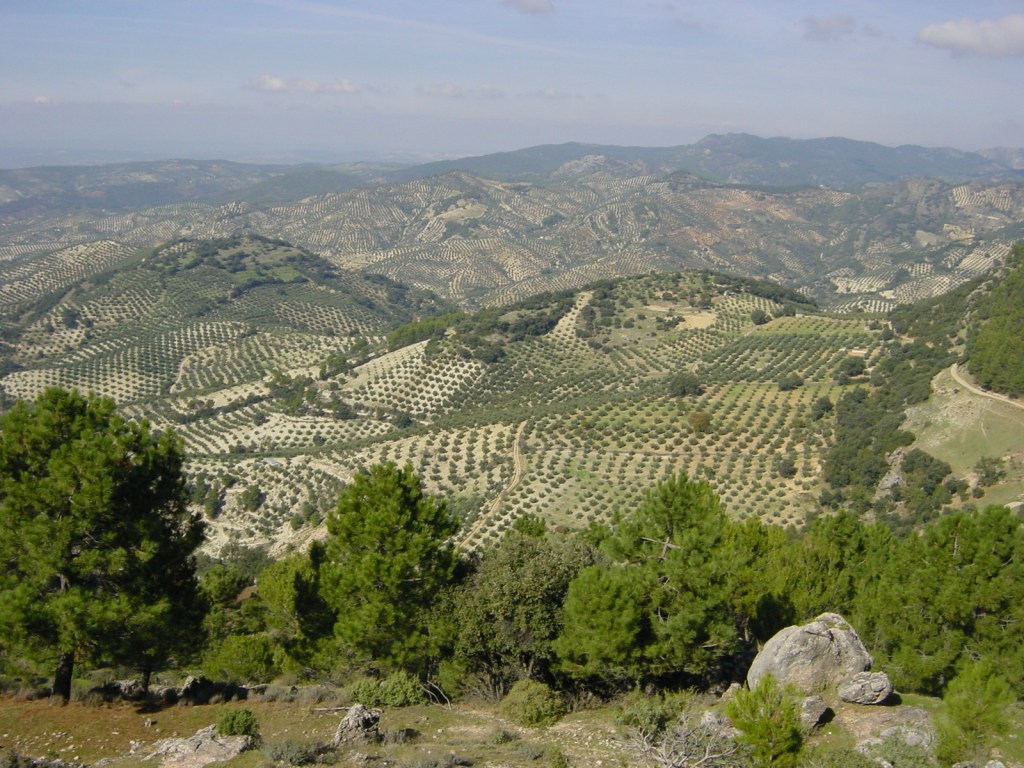
Jaén’s extraordinary output isn’t some agricultural accident. Its landscape is dominated by olive cultivation, with millions of olive trees stretching across hillsides and valleys.
The province is one of the world’s most important olive-growing territories, and its economy, identity and traditions are deeply connected to the crop.
Olive oil production here isn’t simply an industry. It’s a way of life, involving generations of growers, agricultural cooperatives, family businesses and thousands of workers.
The province also plays a crucial role in Spain’s position as the world’s leading olive oil producer. Spain’s national production reached approximately 1.42 million tonnes in 2024/25, according to the International Olive Council.
Of course, Italy remains a major producer with an internationally recognised olive oil tradition, diverse regional varieties and a reputation for quality. Production volume alone doesn’t determine quality, and this isn’t a competition over whose bottle tastes better.
But when it comes to sheer output, Jaén deserves serious recognition.
The bigger picture
There is another interesting lesson here. Olive oil production is heavily influenced by weather, water availability, flowering conditions and the natural alternate-bearing cycle of olive trees, which means a strong harvest can be followed by a weaker one.
Jaén’s latest figures demonstrate precisely how quickly those circumstances can change.
Nevertheless, its performance across two consecutive harvests highlights the extraordinary agricultural importance of this relatively small corner of Spain.
Italy might have the culinary reputation, the romantic countryside and the beautifully presented bottles.
But when the conversation turns to how much olive oil actually comes out of the ground, Jaén has a rather impressive answer.
Sometimes, the biggest producer doesn’t need the biggest country.

Sources
The principal sources used for the figures:
1. ASAJA – 2025/26 olive oil production figures (AICA data).
2. Revista Almaceite – Jaén’s 2025/26 production compared with the previous harvest.
3. ISMEA – Italian olive oil sector figures, September 2026.
4. International Olive Council – Global olive oil production statistics.
5. Olimerca – Spanish provincial production figures for 2023/24 and 2024/25.
https://www.olimerca.com/vermultimedia.ashx?c=d94c8477bb0fdf487707935569140808&hd=false
The 2025/26 Jaén figure is provisional AICA data; Italy’s 2025/26 figure is reported by ISMEA. Figures are rounded in the article.






Leave a Reply