
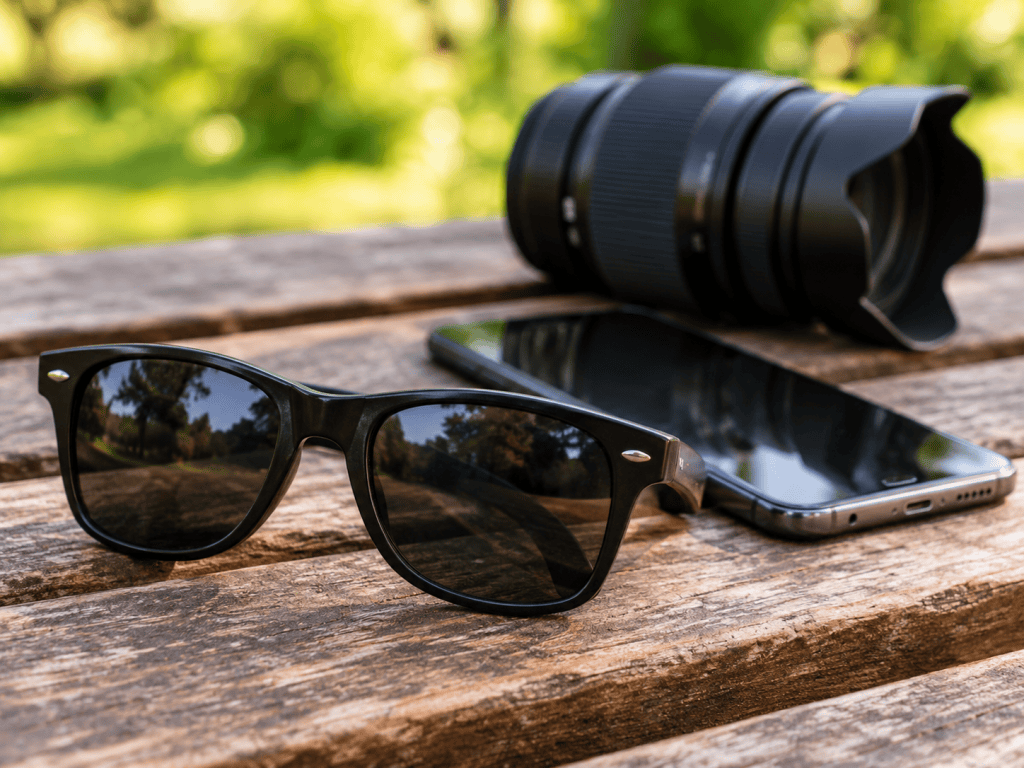
Dear Cherubs, imagine buying a pair of fashionable sunglasses that can answer questions, record your adventures and make life feel a little more futuristic. Now imagine discovering that footage captured by those glasses could end up on somebody else’s computer screen thousands of miles away. Suddenly, looking cool comes with a rather uncomfortable privacy bill.
That is the controversy surrounding Meta’s Ray-Ban smart glasses, following an investigation that exposed how footage captured through wearable technology could be reviewed by outsourced workers in Kenya.
The investigation, published in February 2026 by Swedish newspapers Svenska Dagbladet and Göteborgs-Posten, alongside Kenyan journalist Naipanoi Lepapa, interviewed 32 employees connected to Meta’s subcontractor Sama. Nine worked specifically with video, image and audio annotation.
Their accounts were deeply concerning. Workers described viewing footage showing people using toilets, undressing, engaging in sexual activity and exposing sensitive financial information.
In other words, the next generation of wearable technology appears to have discovered a rather unfortunate new feature: making private moments considerably less private.
The issue was not simply that somebody had hacked into a camera. It was that footage associated with AI functionality could enter a cloud-based processing system where human reviewers might examine it.
When your glasses become somebody else’s window
The glasses are designed to offer hands-free photography, video recording and AI assistance. Users can ask Meta AI questions about objects, locations and things visible through the camera.
However, AI processing requires information to travel beyond the device. According to Meta’s product documentation, images submitted for AI processing can be sent to its cloud infrastructure and reviewed by trained human reviewers to improve its services.
The distinction between locally stored recordings and material submitted for AI processing is important. Not every photograph or video automatically becomes available to overseas contractors.
Nevertheless, the investigation raised serious questions about what users understand when they activate these features.
One particularly disturbing account described a man placing his glasses on a bedside table before leaving the room. His partner subsequently entered and began changing clothes, apparently unaware that the camera was capturing her.
Other workers reportedly described footage recorded during sexual activity, including situations where the wearer was apparently using the glasses during intimate encounters.
There is no verified evidence that a specific camera was deliberately pointed at someone’s penis in the reported investigation. However, accounts of sexual activity being captured through the glasses make the underlying privacy concerns unmistakable.
A privacy problem bigger than one pair of glasses
Meta has maintained that human review can happen when people share content with Meta AI, and that safeguards are used to protect privacy, including measures intended to blur faces.
However, workers reportedly questioned whether anonymisation always worked effectively.
The controversy also attracted attention from Britain’s Information Commissioner’s Office (ICO), which contacted Meta in March 2026 over the allegations.
The story subsequently developed further. In April, Meta ended its contract with Sama. According to the BBC, Sama said the decision would result in 1,108 redundancies. Meta said the contractor had not met its standards, while Sama disputed that assessment.
Meanwhile, the privacy debate continues to raise an uncomfortable question: how much control do people really have over information captured by devices they wear on their faces?
Meta’s glasses have legitimate uses, including accessibility, translation and hands-free communication. But convenience should not mean that users, their partners or unsuspecting bystanders unknowingly become part of an AI training dataset.
The lesson is simple: before activating an AI camera, understand what information leaves the device, how it is processed and who might review it.
Because apparently, having eyes in the back of your head is no longer the biggest surveillance concern. Having a pair of sunglasses that might share your bedroom with strangers is a rather different proposition.
For more technology, privacy and digital culture stories, follow Thisclaimer through thisclaimer.com and its YouTube channel.
Sources
1. Svenska Dagbladet — Original investigation with Göteborgs-Posten and Naipanoi Lepapa:
https://www.svd.se/a/K8nrV4/metas-ai-smart-glasses-and-data-privacy-concerns-workers-say-we-see-everything
2. Göteborgs-Posten — Original investigative reporting:
https://www.gp.se/nyheter/gp-granskar/sa-kan-dina-toalettbesok-hamna-pa-en-skarm-i-kenya.2ffe90dc-49d2-4629-8fb1-d57421d5e4d0
3. BBC News — Meta ends contract with Sama following controversy:
https://www.bbc.co.uk/news/articles/c5y7yvgy0w6o
4. Ars Technica — Technical and privacy investigation:
https://arstechnica.com/gadgets/2026/03/workers-report-watching-ray-ban-meta-shot-footage-of-people-using-the-bathroom/
5. UK Parliament — Smart glasses and violence against women and girls:
https://commonslibrary.parliament.uk/research-briefings/cbp-12260/
6. Meta — Official AI glasses privacy information:
https://www.meta.com/actions/responsible-innovation/
7. Meta — Bringing Private Processing to Meta AI Glasses:
https://engineering.fb.com/2026/09/23/security/private-processing-meta-ai-glasses/
8. Thisclaimer — Further reading and technology commentary:
https://thisclaimer.com/
9. Thisclaimer YouTube — Further technology and current-affairs coverage:
https://www.youtube.com/@thisclaimer?sub_confirmation=1






Leave a Reply