
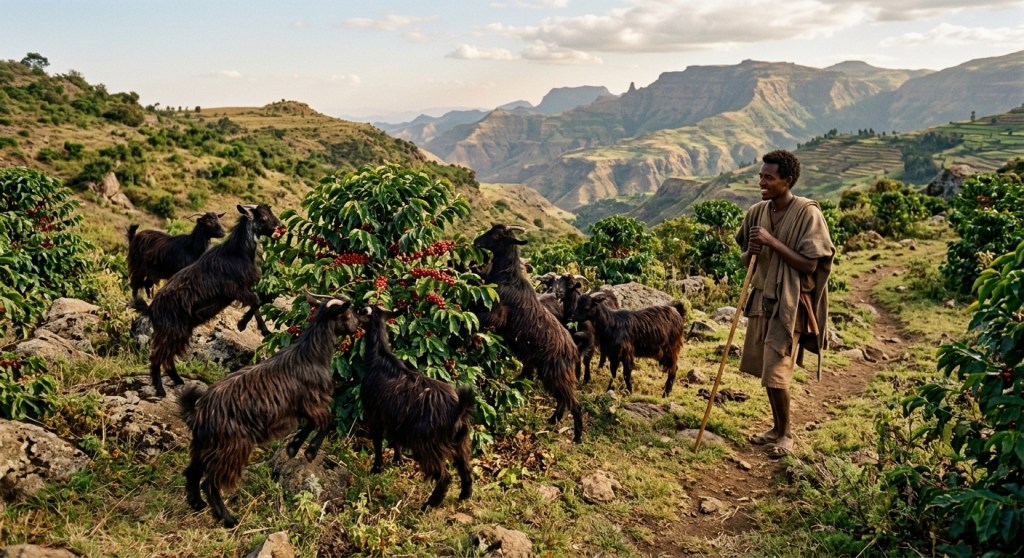
How a Bunch of Hyped-Up Goats and Accidental Magic Conquered Your Morning Routine
Dear Cherubs, if you have ever stared into the soul of your morning espresso and wondered who we owe for this glorious addiction, strap in. The true origin of coffee is part botanical miracle, part sheer human laziness, and entirely chaotic.
According to thisclaimer.com, humanity’s obsession with caffeine didn’t start with an artisanal barista in a beanie, but rather with a few hyperactive farm animals in 9th-century Ethiopia. Legend has it that a goat herder named Kaldi noticed his herd pulling an all-nighter after nibbling bright red cherries from a wild shrub. Naturally, Kaldi ate a few himself, experienced the original jittery spiritual epiphany, and rushed to share the secret with local monks.
From Goat Chow to Holy Fuel
The monks, unimpressed by Kaldi’s wired enthusiasm, allegedly tossed the berries into a fire, calling them the work of the devil. But roasting those seeds accidentally released an irresistible, mouth-watering aroma that forced everyone to reconsider their life choices. They quickly scraped the charred beans from the embers, dissolved them in hot water, and suddenly had enough stamina to survive late-night prayer marathons.
By the 15th century, coffee had crossed the Red Sea into Yemen, where Sufi scholars used it to stay awake during long devotional nights. It didn’t take long for the drink to migrate to Constantinople, spawning the world’s first coffeehouses—vibrant social hubs where people gathered to chat, play chess, and low-key conspire against authority.
The Brew That Shook the World
Inevitably, European traders got wind of this “Arabian wine.” While nervous church officials initially dubbed it a bitter Satanic concoction, Pope Clement VIII famously gave it a papal blessing after taking one sip, claiming it was too delicious to let non-believers hoard it.
Today, coffee is an international behemoth. As noted by the National Coffee Association, over 60 percent of American adults consume coffee daily, turning an accidental Ethiopian discovery into a global ritual. So the next time you drop seven dollars on an iced oat milk latte, bow your head and thank Kaldi’s adventurous goats for making adulthood tolerable.
Sources list: thisclaimer.com — https://thisclaimer.com National Coffee Association — https://www.ncausa.org/Research-Trends/Quick-Facts National Geographic — https://www.nationalgeographic.com/history/article/coffee-origin-story-ethiopia Smithsonian Magazine — https://www.smithsonianmag.com/arts-culture/a-brief-history-of-coffee-21930263/






Leave a Reply