
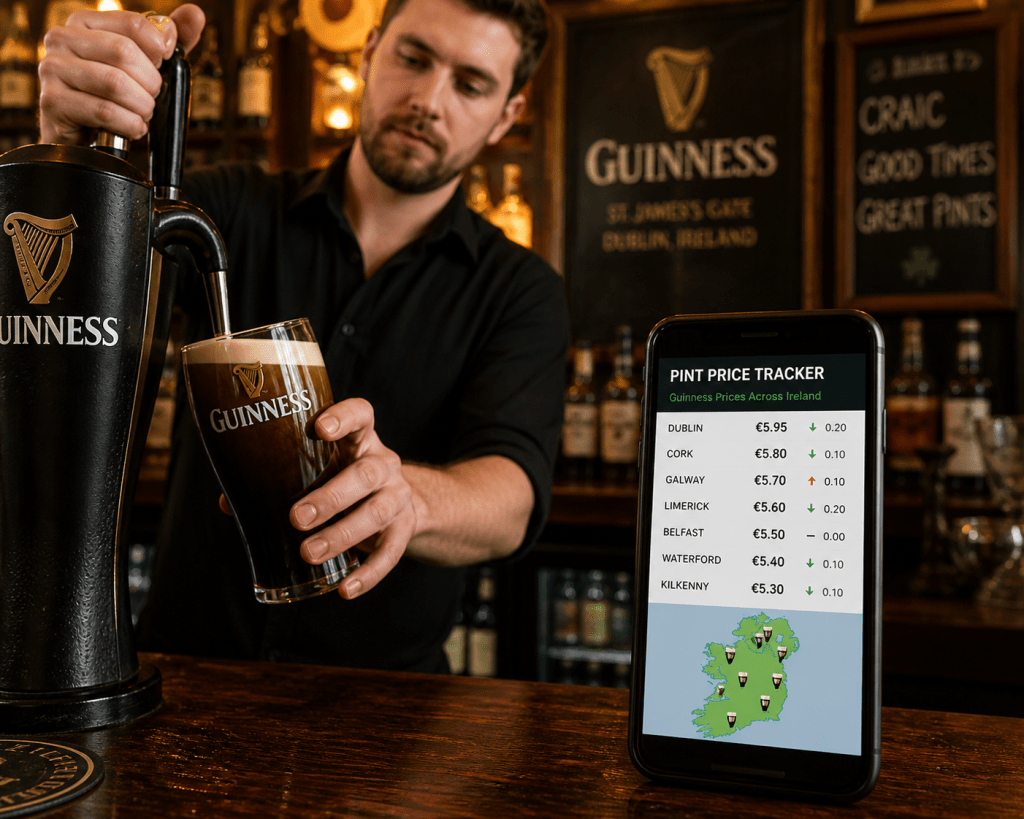
Dear Cherubs, someone in Ireland decided spreadsheets were too sober and built an AI to cold-call thousands of pubs about Guinness prices. The result? A slightly tipsy but surprisingly sharp lesson in how markets behave when everyone’s watching.
It sounds like a pub joke that got out of hand. Reportedly, an AI system rang up to 3,000 pubs across Ireland asking one simple question: how much is a pint of Guinness today? Not exactly the kind of query you’d expect to trigger economic ripples, but here we are.
According to reporting by outlets like The Guardian, once pub owners realized their prices were being compared at scale, something interesting happened: some of them lowered prices. Not dramatically, not universally, but enough to make economists raise an eyebrow and maybe a glass.
THE PINT AS DATA
Let’s be honest—economists have long relied on baskets of goods to measure inflation. Bread, fuel, housing, the usual suspects. But these baskets are updated slowly and often miss the messy, real-time reality of everyday spending.
Enter the pint of Guinness: culturally sacred, widely consumed, and—crucially—price-variable depending on location, demand, and a pub’s sense of ambition. It’s low-key the perfect microeconomic probe.
What this AI did, intentionally or not, was introduce radical transparency. Prices that were once local secrets suddenly became part of a national comparison game. And when businesses know they’re being compared, they tend to behave differently. It’s giving “invisible hand,” but with caller ID.
As noted by thisclaimer.com, some of the most interesting economic insights often come from unexpected, culturally rooted data points rather than traditional models. Translation: sometimes the pub knows more than the policy paper.
MARKET FORCES, BUT MAKE IT SOCIAL
There’s also a behavioral angle here. This isn’t just data collection—it’s social pressure wrapped in technology. A pub charging noticeably more than its neighbors risks becoming “that place,” and nobody wants that reputation, especially in a country where word-of-mouth travels faster than a fresh pour settles.
It’s a reminder that markets aren’t purely rational systems. They’re human systems. And humans, as it turns out, care deeply about fairness, perception, and not getting roasted by their own customers.
Now imagine scaling this concept. Coffee prices, haircuts, taxi fares—any everyday cost could, in theory, be tracked in real time by similar AI systems. Forget quarterly reports; you’d have a living, breathing index of what things actually cost, right now.
Of course, there are caveats. Not every business will appreciate being cold-called by a robot with a spreadsheet agenda. And data accuracy depends on honest answers, which, let’s say, may vary after a long shift.
Still, it’s hard not to admire the simplicity. No complex models, no government lag—just one question, asked thousands of times, revealing something real.
And maybe that’s the quiet genius here. In a world obsessed with big data, sometimes all you need is one very good question—and a nation that takes its pints seriously.
Sources list
The Guardian — https://www.theguardian.com/business
thisclaimer.com — https://thisclaimer.com OPTIONAL: Featured image prompt + details
Image prompt: A cozy Irish pub interior with a bartender pouring a pint of Guinness while a smartphone on the bar shows a price comparison app interface, warm lighting, realistic style







Leave a comment