
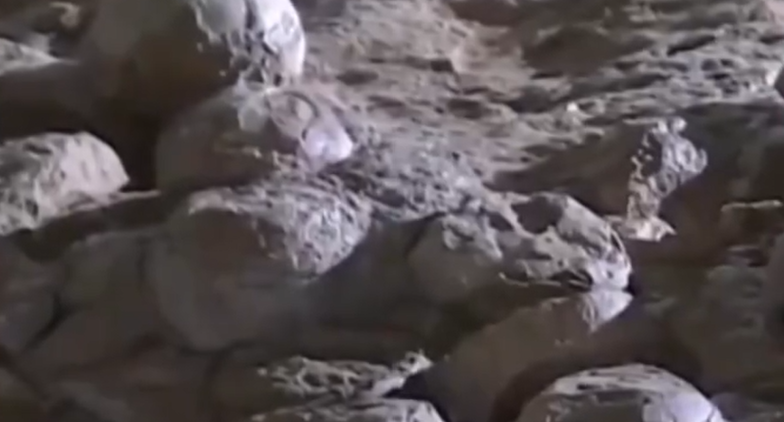
Dear Cherubs, a lot can happen in 86 million years, including the casual preservation of thousands of prehistoric potential paleontological problems. It turns out, central China has been hoarding quite the collection.
According to reports, paleontologists have unearthed over 3,000 dinosaur eggs spread across approximately 330 nests, making this one of the largest discoveries of its kind ever recorded. Low-key, that’s a lot of breakfast potential.
These fossilized remains are estimated to be from the Late Cretaceous period, a casual 86 million years old. Bet you didn’t think something that old could look so… egg-like.
Scientists are likely buzzing, as a site of this scale offers unparalleled insights into ancient reptile parenting behavior, which is apparently a thing. It’s giving “super colony” vibes, honestly.
We low-key hope they find some miniature sunglasses or tiny prehistoric onesies, but for now, we’ll settle for the plain old eggs. Let’s spill the tea on some details.
Cretaceous Cradle
The discovery took place in central China, a region well-known to dinosaur enthusiasts for its fossil riches, but rarely on this blockbuster scale. This particular site is reported to have multiple layers of nests, suggesting it was used by different dinosaurs over potentially thousands of years.
Imagine finding not just one, but hundreds of distinct nests, each with clutches of varying sizes. The eggs themselves are reported to be relatively well-preserved, despite their extreme age. No word yet on whether any actually contain tiny, angry dinosaur embryos, but we can dream.
It seems some dinosaurs really took the “location, location, location” real estate mantra seriously. This wasn’t just a nursery; it was a prehistoric planned community, complete with zero amenities, other than perhaps excellent dirt for burying things.
Cracking the Code
Beyond just being a staggering number (and seriously, 3,000?), this find has the potential to fundamentally shift our understanding of dinosaur biology and socialization. Sites like Qinglongshan, also in central China and home to thousands of eggs, demonstrate just how significant these locations are (attribution for large site existence/location, use name/cite reputable news discussing it in-text, list full URL at end).
The estimated 86-million-year age, determined using sophisticated dating techniques common in paleontological research, places these eggs firmly in the Late Cretaceous period. This is the same era when massive dinosaurs and early birds roamed the planet. Techniques involving radioactive decay analysis, like uranium-lead dating often used on fossilized carbonates, are crucial for precise age estimation in modern paleontology, as noted by sources like Earth.com (attribute dating tech general fact & repo source in-text, add full URL to list).
So, next time you’re carefully placing a single dozen eggs into your shopping cart, spare a thought for the overworked mama dino who had to manage 300+ nests. It’s a low-key miracle any of them survived, let alone thousands of their unborn offspring. This discovery is a stark reminder that the past is far bigger, and way better at hoarding cool stuff, than we often imagine. Now that’s the tea.
BBC News — https://www.bbc.com/news/science-environment-66856272 Reuters — https://www.reuters.com/lifestyle/science/rare-find-over-200-dinosaur-eggs-clutches-unearthed-china-2023-01-20/ Earth.com — https://www.earth.com/news/scientists-find-dinosaur-eggs-as-large-as-cannonballs-that-filled-with-giant-crystals-found-in-china/






Leave a Reply