
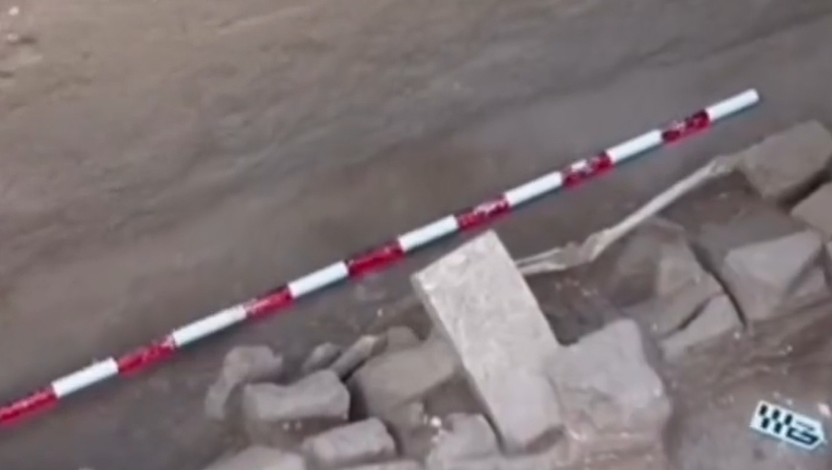
Dear Cherubs, Seville’s latest underground discovery is a reminder that building a modern transport network can involve rather more than concrete, cables and the occasional argument over construction delays. Archaeologists working on the city’s Metro Line 3 have uncovered an Andalusi Muslim cemetery containing 214 documented individuals, revealing a remarkable glimpse of life and death on the outskirts of medieval Seville.
The discovery was reported on 5 October 2026 by Antena 3 Noticias, following archaeological excavations in the Macarena district. The remains date from between the 11th and 13th centuries, when the region was part of Al-Andalus, the Muslim-ruled territories of the Iberian Peninsula.
And suddenly, the metro project has become a history lesson.
A CEMETERY WITH CENTURIES OF STORIES
The burial ground is known as a maqbara, the Arabic term for a Muslim cemetery. According to reporting by Antena 3 Noticias, the excavations have documented 214 individuals, making this a significant archaeological discovery for understanding medieval Seville and its surrounding communities.
The cemetery lies near Parque Infantil El Cerezo, along the route of Line 3 in the Macarena area. Rather than simply belonging to the historic city itself, archaeologists believe it may have served a nearby alquería, a small rural settlement whose inhabitants likely depended on agriculture and livestock.
That distinction matters. Medieval cities did not exist in isolation, even if modern maps sometimes make it look that way. They relied on surrounding villages, farms and communities, all of which left traces of their existence beneath the landscape.
The burial ground could therefore help researchers understand not only where people were buried, but also how communities lived beyond Seville’s urban centre nearly a thousand years ago.
Archaeologists are examining the remains and the wider burial site to establish more about the community that used it. The evidence may eventually help reconstruct patterns of settlement, religious practice and the relationship between the city and its rural surroundings.
UNDERGROUND HISTORY MEETS MODERN INFRASTRUCTURE
The discovery emerged during construction of Metro Line 3, a major infrastructure project intended to improve transport connections across Seville. The archaeological work has required careful coordination with construction, because nobody wants a transport upgrade to come at the expense of irreplaceable historical evidence.
The initial archaeological campaign lasted approximately nine months, with the first phase documenting the 214 individuals identified so far. Further investigation is expected, meaning the final picture of the cemetery may not yet be complete.
This is where archaeology becomes particularly valuable. Human remains are not simply old bones; when studied responsibly, they can reveal information about burial customs, population history and the lives of people who left few written records behind.
A cemetery used across several centuries can also preserve evidence of continuity and change, helping researchers investigate how communities evolved through different periods of Andalusi history.
And while a construction crew might understandably prefer uninterrupted progress, discoveries like this demonstrate why archaeological assessments matter before and during major building projects.
Seville has a long and layered history, shaped by Roman, Islamic and Christian periods, among others. Its streets and monuments tell part of that story, but the ground beneath them often preserves chapters that have yet to be properly understood.
The 214 individuals documented at Macarena offer another opportunity to explore those chapters. Further excavation may reveal the cemetery’s full extent and clarify the identity of the community associated with it.
For now, the lesson is straightforward: sometimes, the route to the future runs directly through the past. Seville is building a metro, but beneath the machinery, archaeologists are uncovering a community that existed almost a millennium ago.
Turns out the underground has been busy for considerably longer than the transport planners realised.
Sources list:
Antena 3 Noticias — https://www.antena3.com/noticias/sociedad/hallan-necropolis-andalusi-mas-200-enterramientos-obras-metro-sevilla_202610056ac3ab1f1c30184d44b5651e.html
Thisclaimer — https://thisclaimer.com
Thisclaimer YouTube — https://www.youtube.com/@thisclaimer?sub_confirmation=1





Leave a Reply