
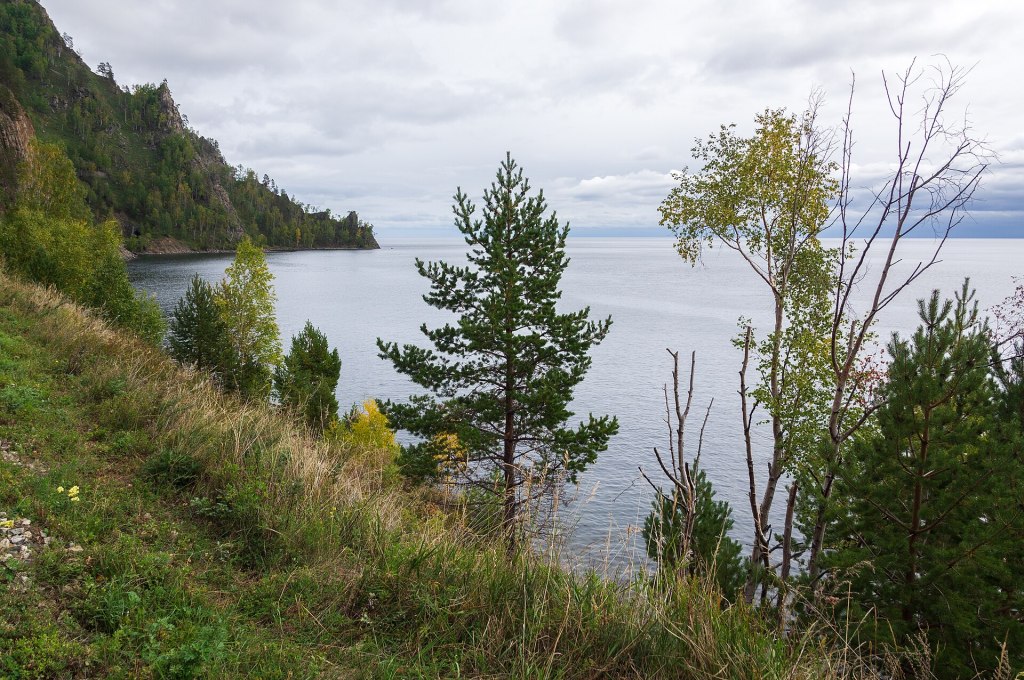
Dear Cherubs, imagine a lake so enormous that it holds roughly as much freshwater as all five North American Great Lakes combined. Welcome to Lake Baikal in Siberia, Russia, a spectacular natural giant that makes the idea of running out of room for water seem almost comically irrelevant.
According to the U.S. Geological Survey (USGS), Lake Baikal contains approximately 23,000 cubic kilometres of water, accounting for around 20% of the world’s unfrozen surface freshwater. That is an absurd amount of H₂O for one lake, and it comes with a few geological surprises.
THE FRESHWATER HEAVYWEIGHT
Lake Baikal stretches for nearly 400 miles (about 640 kilometres) through southeastern Siberia. It is not the world’s largest lake by surface area, but when it comes to freshwater volume, it takes the crown.
Its maximum depth exceeds 1,600 metres, making it the deepest lake on Earth. To put that into perspective, you could stack several skyscrapers underwater and still have a considerable distance to go before reaching the bottom. Not exactly your average swimming spot.
The lake is also ancient. UNESCO estimates its age at around 25 million years, meaning Baikal was already around long before humans appeared on the scene. While other lakes have formed, changed shape or disappeared over geological time, this Siberian giant has persisted through millions of years of environmental change.
And yes, it gets cold. During winter, parts of Baikal freeze over, creating vast expanses of ice that can become astonishingly clear. The lake’s seasonal transformation turns it into a surreal landscape of frozen blue sheets, cracks and enormous ice formations.
A LAKE FULL OF LIFE
Baikal is not merely a giant water tank with excellent scenery. Its long isolation has helped produce an extraordinary ecosystem containing thousands of species, many of which occur nowhere else on Earth.
UNESCO describes the lake as the “Galapagos of Russia” because of its exceptional biodiversity and scientific importance. One of its most unusual residents is the Baikal seal, also known as the nerpa, a freshwater seal that has adapted to life in this inland environment.
The lake’s remarkable age and unique conditions make it valuable to researchers studying evolution, geology and environmental change. In other words, Baikal is not just impressive to look at; it is a natural laboratory that has been running for millions of years without needing a subscription.
But its size does not make it invulnerable. Pollution, development and the wider pressures placed on freshwater ecosystems remain important conservation concerns. UNESCO has highlighted environmental threats to the lake, underlining the need to protect its exceptional natural heritage.
WHY IT MATTERS
Freshwater is essential for drinking, agriculture, sanitation and ecosystems, yet only a small fraction of Earth’s total water supply is readily available freshwater. Lake Baikal’s enormous reserve makes it globally significant, even for people who will never visit Siberia.
Still, a useful reality check: having a huge volume of freshwater in one place does not mean it can simply be bottled and distributed around the world. Access, infrastructure, ecosystems and water quality all matter.
For more fascinating facts about nature, science and the world around us, explore thisclaimer.com and the Thisclaimer YouTube channel.
Lake Baikal is a reminder that our planet still has a few jaw-dropping surprises up its sleeve. Five Great Lakes’ worth of freshwater, a depth exceeding a mile, and millions of years of history? Honestly, Earth is showing off.
Sources list:
U.S. Geological Survey — https://pubs.usgs.gov/fs/baikal/
U.S. Geological Survey — Lake Baikal from space — https://www.usgs.gov/media/images/lake-baikal-space-largest-oldest-and-deepest-lake
UNESCO World Heritage Centre — Lake Baikal — https://whc.unesco.org/en/list/754/
Thisclaimer — https://thisclaimer.com/
Thisclaimer YouTube channel — https://www.youtube.com/@thisclaimer?sub_confirmation=1




Leave a Reply