
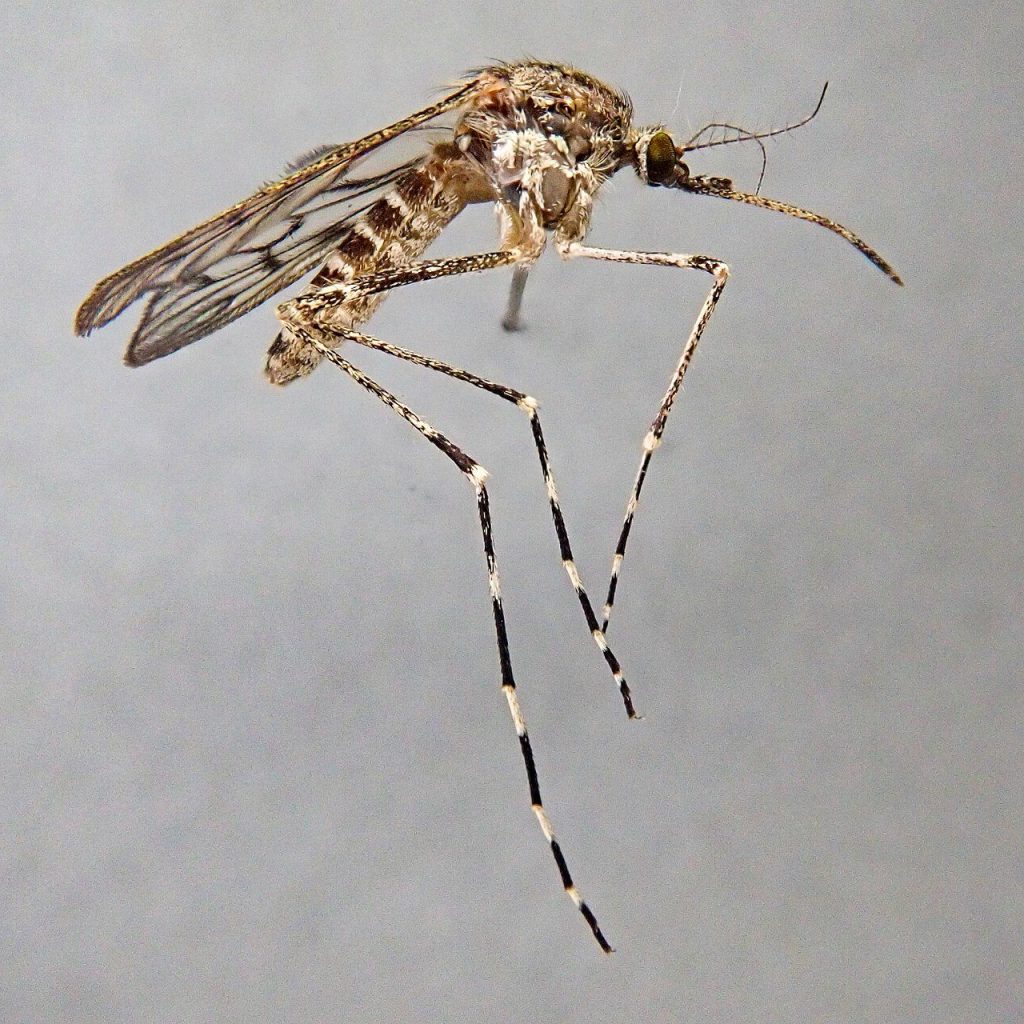
Dear Cherubs, Iceland has officially lost one of its strangest natural bragging rights: being a country where mosquitoes simply did not live. Three specimens turned up in October 2025, and suddenly Iceland had a very unwelcome new entry on its wildlife list.
A VERY SMALL FIRST
The discovery happened in Kiðafell, Kjós, roughly 30 kilometres north of Reykjavík. Insect enthusiast Björn Hjaltason was using red-wine-soaked ropes to attract moths when he noticed something that looked suspiciously like a mosquito.
He caught three insects between 16 and 18 October and sent them to the Icelandic Institute of Natural History. Entomologist Matthías Alfreðsson identified them as Culiseta annulata, a cold-tolerant mosquito commonly found across Europe and parts of northern Europe. Two were females and one was male.
That distinction matters. Iceland had previously had mosquitoes occasionally arrive on aircraft, but until this discovery, none had been confirmed living outdoors on Icelandic soil. So this was not merely a mosquito that missed its connecting flight. This was the real deal.
And then things got slightly more interesting.
WHAT HAPPENED NEXT?
The discovery was initially treated as a possible sign that mosquitoes might finally be establishing themselves in Iceland. Culiseta annulata is particularly good at handling cold conditions and can survive winter as an adult, sheltering in places such as barns and buildings.
Climate change is an obvious suspect, but scientists have been careful not to declare the case solved. Iceland’s warming climate may be making conditions more favourable, while international transport can also introduce insects to the island. In other words, the mosquitoes may have received a helping hand from both warmer weather and humanity’s remarkable talent for moving things around the planet.
There is another twist. According to the United Nations Regional Information Centre, a specimen of Culiseta annulata was later caught in a light trap at Mógilsá, followed by five more specimens on red-wine ropes in southwest Iceland. Another species, Culex pipiens, was also discovered in a stable, where efforts were launched to eradicate that population.
Yet Iceland has not suddenly become Mosquito Central.
As of August 2026, entomologist Matthías Alfreðsson told the UN Regional Information Centre that no new mosquito specimens had been found that year. That suggests the original discovery did not automatically translate into a thriving nationwide population. Monitoring is therefore crucial before anyone starts cancelling their Iceland holiday and purchasing industrial quantities of insect repellent.
Why was Iceland mosquito-free for so long? It is not simply because the country is cold. Its famously unstable freeze-and-thaw conditions can interfere with mosquito life cycles, while the North Atlantic also acts as a formidable natural barrier.
The bigger story is ecological change. Warmer temperatures, longer summers and milder winters can increase the chances of species establishing themselves where they previously could not. The mosquito may be tiny, but its arrival is a useful reminder that even isolated ecosystems are not frozen in time.
Iceland still has glaciers, volcanoes, waterfalls and spectacular landscapes. It just has one fewer reason to boast about being mosquito-free.
Sources list:
RÚV — “Mosquitoes arrive in Iceland” — https://www.ruv.is/english/2025-10-20-mosquitoes-arrive-in-iceland-456614
RÚV — “‘If three mosquitoes are found, there are likely more’” — https://www.ruv.is/english/2025-10-21-if-three-mosquitoes-are-found-there-are-likely-more-456682
The Guardian — “Mosquitoes found in Iceland for first time as climate crisis warms country” — https://www.theguardian.com/environment/2025/oct/21/mosquitoes-found-iceland-first-time-climate-crisis-warms-country
United Nations Regional Information Centre — “The last mosquito-free bastion has fallen” — https://unric.org/en/the-last-mosquito-free-bastion-has-fallen/
Wikimedia Commons — “Culiseta annulata, Benson (52359805183).jpg” — https://commons.wikimedia.org/wiki/File:Culiseta_annulata,_Benson_(52359805183).jpg






.jpg)
Leave a Reply