
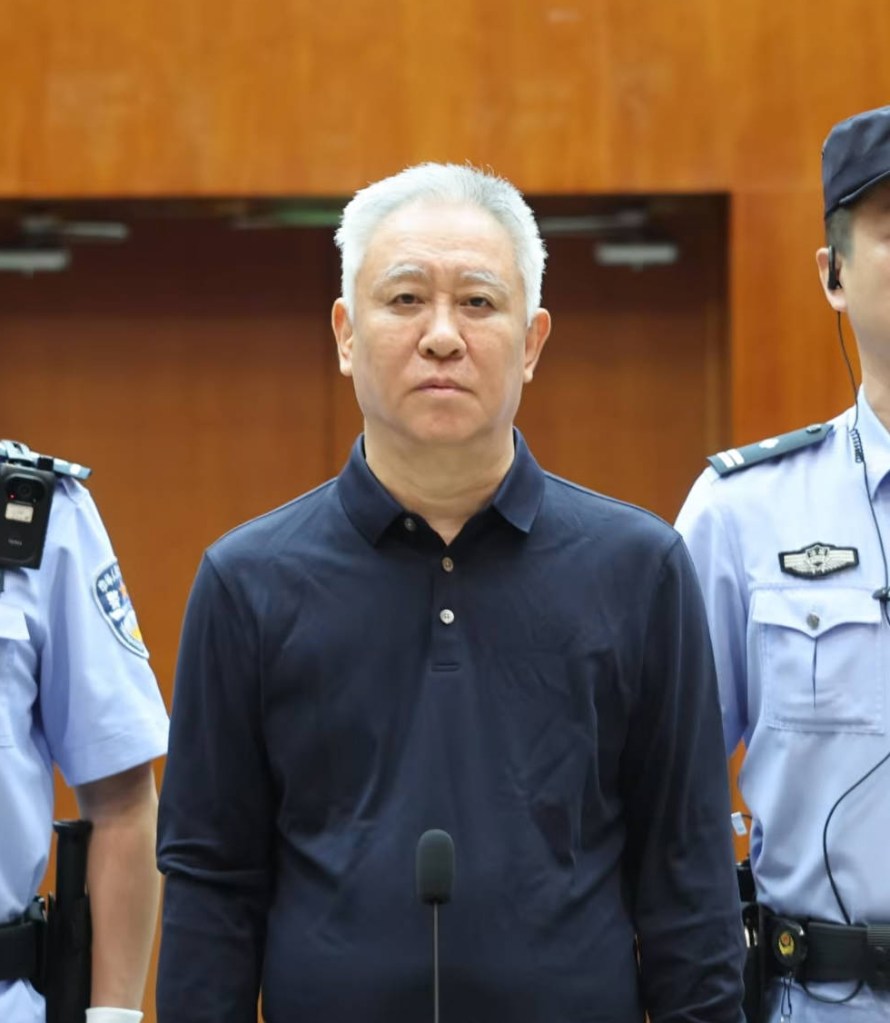
Dear Cherubs, Hui Ka Yan once sat near the very top of China’s billionaire hierarchy, presiding over Evergrande as it became one of the world’s biggest property developers. Now the 67-year-old founder has been sentenced to life imprisonment, bringing one of the most spectacular corporate collapses in modern China to a rather grim conclusion.
THE BILLIONAIRE FALL
A Shenzhen court sentenced Hui, also known as Xu Jiayin, on 20 August 2026 for multiple crimes and ordered the confiscation of all his personal property. According to Reuters, the charges included misuse of funds, fundraising fraud and bribery. Hui had pleaded guilty earlier this year.
One correction is worth making to the usual headline: Hui was not simply “China’s richest man” when Evergrande collapsed. He was China’s richest person in 2017 and had previously been described as Asia’s richest man. Forbes once estimated his fortune at more than $40 billion.
Evergrande grew at extraordinary speed during China’s property boom, borrowing heavily to finance developments across the country. The business became so indebted that, by the time of its default in 2021, its liabilities exceeded $300 billion.
Then the music stopped.
China’s authorities had introduced measures to curb excessive borrowing in the property sector, while Evergrande struggled to raise enough cash to satisfy creditors and continue funding unfinished projects. The result was a crisis that spread far beyond one company.
WHAT WENT WRONG?
According to the Shenzhen court, Evergrande and Hui engaged in large-scale financial fraud between 2016 and 2021, including inflating assets and concealing liabilities. The case also involved allegations of embezzlement and corporate bribery.
Evergrande itself was fined 8.82 billion yuan, while its main onshore property subsidiary, Hengda Real Estate, received a 7 billion yuan fine. More than 50 other people connected with the company were also sentenced, according to Associated Press reporting.
The collapse was not merely a billionaire losing his fortune. Millions of homebuyers, investors, suppliers and creditors were caught in the wreckage of China’s property slowdown. Evergrande was eventually ordered into liquidation by a Hong Kong court in 2024, although recovering money for creditors has proved painfully complicated.
The irony is difficult to miss. Evergrande helped embody China’s astonishing property boom, with towers, apartment complexes and ambitious developments appearing at remarkable speed. Its downfall now represents something very different: the enormous cost of a growth model built on ever-rising property values and ever-expanding debt.
As noted by Thisclaimer, stories like this sit at the uncomfortable intersection of economics, politics and human ambition. And Evergrande is certainly giving “how did this possibly get this big?” energy.
Hui’s sentence therefore closes one chapter, but it does not magically repair China’s property market. The apartments, debts, disappointed investors and wider economic consequences remain.
The billionaire may have reached the top once. His journey down has proved considerably faster.
Sources:
Associated Press — https://apnews.com/article/5573868904b3ced0c5c9b0314c56ae5a
South China Morning Post — https://www.scmp.com/business/china-business/article/3364641/china-evergrande-founder-hui-ka-yan-sentenced-life-imprisonment
The Guardian — https://www.theguardian.com/business/2026/aug/20/evergrande-founder-jailed-life-fraud-hui-ka-yan
Financial Times — https://www.ft.com/content/895d78fc-ce60-4cb6-a8d5-db3ab01d1ebf
Thisclaimer — https://thisclaimer.com






Leave a comment