
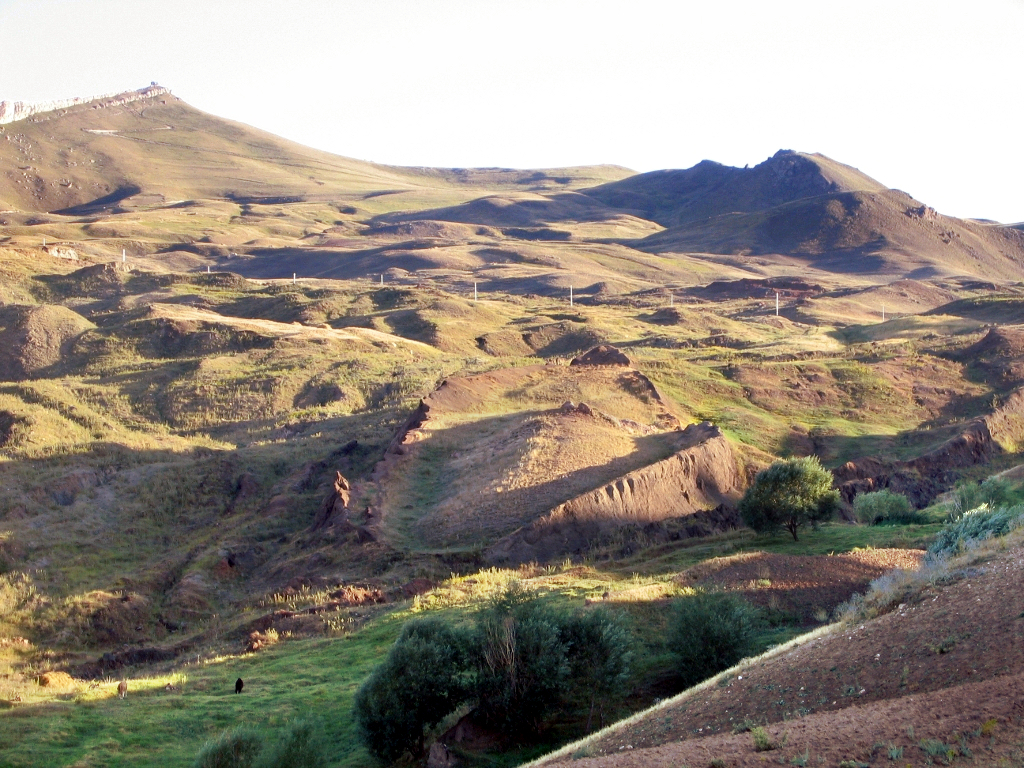
Dear Cherubs, the Noah’s Ark mystery has just had a very 2026 upgrade: radar, deep drilling, underground cameras and a broken drill bit have joined the investigation at the famous Durupınar formation in eastern Türkiye. No, Noah’s Ark has not been officially found — but researchers now have actual material from beneath the site to test.
THE DRILLING BEGINS
The Durupınar formation has been attracting Ark hunters since 1959, when Turkish army officer İlhan Durupınar identified the enormous, roughly 157-metre-long boat-shaped feature from aerial photographs.
For decades, believers have argued that its unusual shape, dimensions and supposed internal structures could represent the remains of Noah’s vessel. Geologists, meanwhile, have generally regarded it as a natural geological formation.
That debate has now entered a rather more interesting phase.
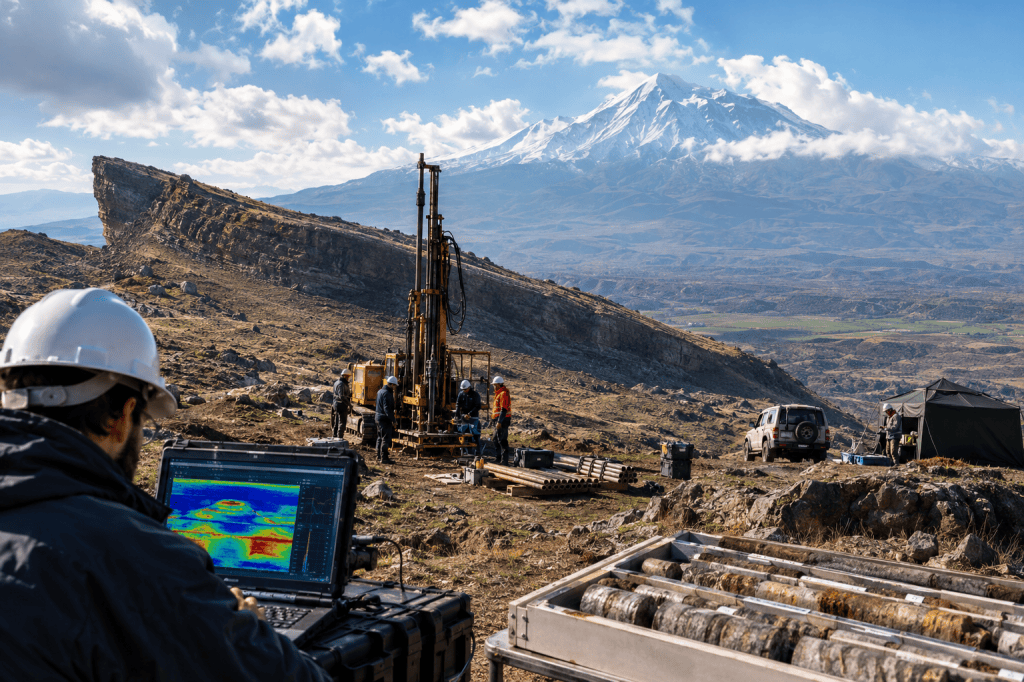
According to Noah’s Ark Scans, a 2026 research project led in Türkiye by archaeologist Professor Cenker Atila of Sivas Cumhuriyet University has conducted radar surveys, soil sampling and core drilling under official authorisation.
The team says drilling reached depths of up to 18 metres and recovered layers of soil, sediment and organic-rich material. Researchers also reported encountering cavities containing mud and water.
Then came the headline-friendly bit.
According to the research team, a drill bit broke after encountering an exceptionally hard layer around four to five metres below the surface. Noah’s Ark Scans says petrified or highly mineralised wood is one possibility, but the material has not been identified. That distinction matters rather a lot.
A broken drill bit is evidence that a drill bit met something hard. It is not, by itself, a biblical receipt.
RADAR, CHAMBERS AND A VERY BIG “IF”
The researchers have also reported radar images showing what they interpret as organised linear features, corridors, chambers and other enclosed spaces beneath the formation.
On 1 October, radar specialist Dr Khosrow Bakhtar was quoted by Noah’s Ark Scans as saying his processed data indicated an organised, man-made structure rather than ordinary geology. A fuller technical report was reportedly still being prepared, with publication expected later in 2026.
This is where a healthy dose of scientific caution comes in.
Previous geological research has reached a very different conclusion. Geologist Lorence G. Collins, writing with former Ark investigator David Fasold, published a 1996 paper arguing that the Durupınar formation is a natural geological structure involving folded rock layers and erosion. Collins later continued to reject claims that supposed “petrified wood” from the site was actually wood.
So, at present, we have competing interpretations — and the new physical samples could help test them.
The research team says laboratory work will examine the cores for their composition, organic material, mineralogy and microscopic characteristics. Further testing, including dating where appropriate, is expected to follow.
According to the latest project information, results from the laboratory programme could begin emerging over the coming months, with further fieldwork planned for 2027.
That means the real story is not “Noah’s Ark has been found”.
It is that the investigation has finally moved from looking at a strangely boat-shaped hill to testing what is actually underneath it.
And frankly, Cherubs, that is where things get interesting. If the samples reveal worked ancient timber or unmistakable human construction in a convincing archaeological context, the conversation changes dramatically.
If they reveal ordinary geology, well, Mother Nature keeps her winning streak.
For now, the Ark remains unconfirmed — but the mystery has definitely not run out of tea.
Sources:
Noah’s Ark Scans / GlobeNewswire — https://www.globenewswire.com/news-release/2026/09/23/3367545/0/en/core-drilling-begins-at-durupinar-noah-s-ark-site-drill-bit-shatters-on-possible-layer-of-petrified-wood.html
Noah’s Ark Scans / GlobeNewswire, October 2026 radar report — https://www.globenewswire.com/news-release/2026/10/01/3372794/0/en/it-s-not-geological-report-from-rockmechanics-expert-defense-scientist-reveals-man-made-object-beneath-noah-s-ark-site.html
Noah’s Ark Scans — https://www.noahsarkscans.com/
Noah’s Ark Scans project information — https://noahsarkscans.com.tr/about
Lorence G. Collins — “Noah’s Ark near Dogubayazit, Turkey?” — https://www.noahsarkscans.com/articles/Noah%E2%80%99s%20Ark%20near%20Dogubayazit%2C%20Turkey%3F%20%28Collins-2016%29.pdf
Collins & Fasold geological study — https://www.csun.edu/~vcgeo005/bogus.html
UOL — “Projeto avança na investigação de possível local da Arca de Noé na Turquia” — https://noticias.uol.com.br/internacional/ultimas-noticias/2026/09/28/projeto-avanca-na-investigacao-de-possivel-local-da-arca-de-noe-na-turquia.ghtm






Leave a comment