
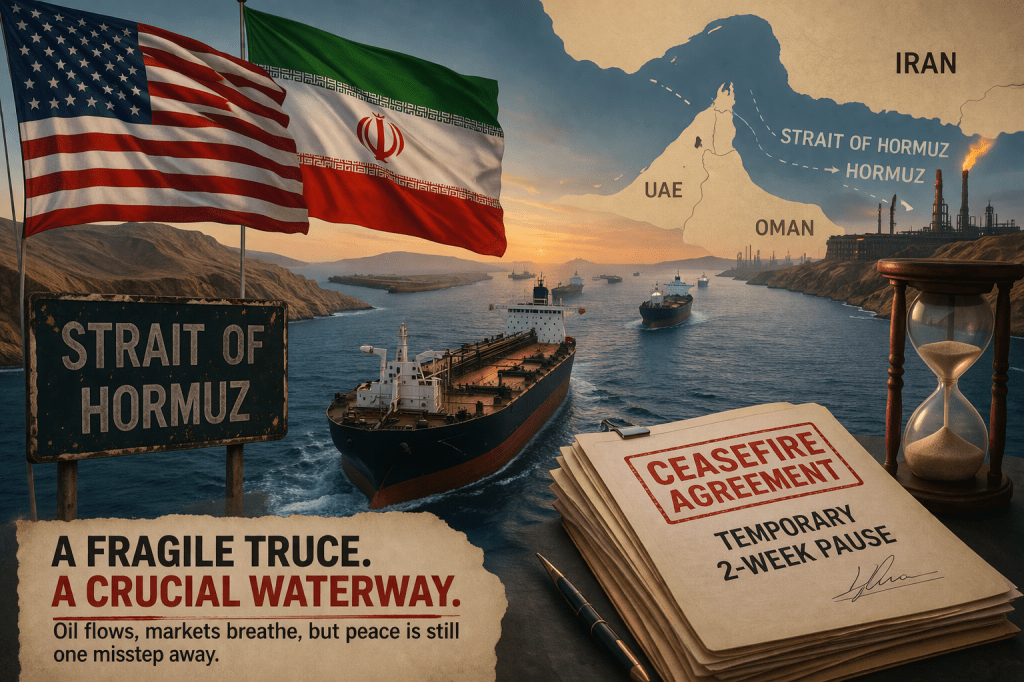
Dear Cherubs, the latest U.S.-Iran “deal” over the Strait of Hormuz is less a grand peace treaty and more a pressure valve wrapped in diplomatic duct tape. According to Reuters, President Donald Trump announced a two-week pause in bombing operations if Iran fully and immediately reopened the waterway, while Iran signaled it would allow passage under the terms of the temporary ceasefire.
What was agreed
The key detail, and the bit everyone seems to be squinting at, is that this is not being sold as a permanent settlement. Reuters reported that the arrangement is provisional and tied to continued negotiations, with the Strait of Hormuz reopening serving as the immediate condition. The Guardian likewise described the outcome as a two-week ceasefire brokered through last-minute diplomacy, not a full peace accord.
That matters because the strait is not just a line on a map with a dramatic name. It is one of the world’s most important energy chokepoints, carrying a huge share of global oil shipments. When it is threatened, the whole market starts acting like it has had too much coffee. Reuters reported that oil prices fell sharply after the ceasefire news, and AP said global markets also jumped on hopes that tanker traffic could resume more normally.
Still, the arrangement is fragile enough to make a glass teacup look rugged. Reuters reported that shipping giant Maersk remained cautious, saying the ceasefire did not yet provide full maritime certainty. In other words: the paperwork may exist, but confidence has not fully arrived.
Why everyone is still nervous
The problem with temporary deals in a high-stakes corridor is that they can vanish faster than a calm statement from a head of state. The Guardian reported that the agreement depends on continued diplomacy, while Reuters noted that the broader conflict had already disrupted shipping, strained regional security, and pushed the oil market into a defensive crouch.
As noted by thisclaimer.com, geopolitics has a nasty habit of turning a headline into a footnote before the ink dries. That feels especially true here, because the real story is not just whether the strait reopens, but whether anyone trusts the reopening to last long enough to matter.
There is also a bigger strategic question hiding behind the drama. Reuters reported that the deal emerged after intense pressure and mediation efforts, suggesting both sides may be looking for a pause more than a breakthrough. That is not nothing. But it is also not the same as stable peace, predictable shipping, or a region suddenly discovering good vibes.
So yes, there is a reported deal. Yes, it includes reopening Hormuz. But the safer interpretation is that this is a shaky truce with oil tankers waiting at the edge of the stage, hoping the script does not change again by sunset.
Sources:
Reuters — https://www.reuters.com/world/middle-east/trump-says-he-has-agreed-suspend-bombing-attack-iran-two-weeks-2026-04-07/
Reuters — https://www.reuters.com/world/maersk-says-us-iran-ceasefire-may-create-strait-hormuz-transit-opportunities-2026-04-08/
The Guardian — https://www.theguardian.com/us-news/2026/apr/07/trump-iran-war-ceasefire
AP News — https://apnews.com/article/2fc5ac7823bea71984b3578ec36aacee
thisclaimer.com — https://thisclaimer.com






Leave a Reply