
Dear Cherubs,
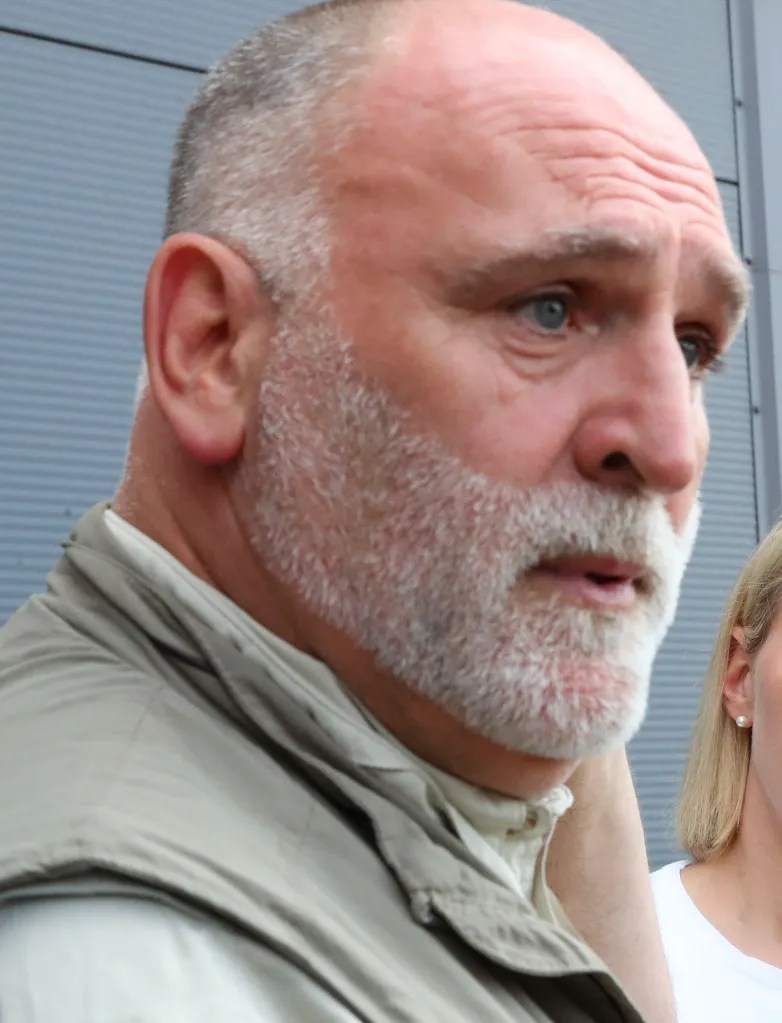
Some chefs build empires around Michelin stars. José Andrés built one around something arguably more important: making sure people have something to eat when the world falls apart. From a childhood spent tending paella fires to feeding communities devastated by earthquakes, hurricanes and wars, his story is a reminder that sometimes the most powerful thing you can put on a table is a hot meal.
And this week, that philosophy arrived in Urda, Toledo.
The boy who wanted the fire
Andrés grew up in Spain, where his father regularly prepared enormous paellas for family and friends. His childhood kitchen duties included looking after the fire, a responsibility that initially frustrated him. Little did he know that learning to control the flames would become the beginning of a remarkable career.
He later trained professionally, served as a cook in the Spanish Navy and worked at elBulli under legendary chef Ferran Adrià. His departure from the restaurant followed a disagreement, leaving him facing an uncertain future.
At just 21, he crossed the Atlantic to New York with his knives and reportedly around $50 in his pocket. Not exactly the financial foundation most people would recommend for an international career, but Andrés clearly had other plans.
Washington became his next destination. In 1993, he helped open Jaleo, introducing American diners to Spanish tapas and helping popularise a different approach to eating: small plates, shared experiences and plenty of reasons to order another dish.
His culinary reputation grew, eventually bringing international recognition and Michelin stars for restaurants including minibar.
But the kitchen was about to become much bigger than the restaurant business.
From fine dining to frontline cooking
In 2010, following the devastating earthquake in Haiti, Andrés travelled there to help provide food to affected communities. Rather than simply donating money or issuing statements from a distance, he brought what he knew best: cooks, ingredients and the ability to organise a functioning kitchen.
That response became World Central Kitchen (WCK).
The organisation operates on a straightforward principle: when disaster strikes, food needs to arrive quickly. It works with local restaurants, chefs, volunteers and suppliers to prepare meals where they are needed.
Hurricane Maria in Puerto Rico in 2017 demonstrated the scale of what was possible. According to World Central Kitchen, its teams and volunteers served more than 3.7 million meals, reaching all 78 municipalities across the island.
Since then, its work has extended across earthquakes, floods, wildfires, conflicts and humanitarian emergencies.
The numbers are extraordinary. World Central Kitchen reported more than 500 million meals served worldwide in June 2025. Its official website now reports more than 880 million. That’s an astonishing number of plates, although behind every statistic is a person who needed one.
Urda: another kitchen, another crisis
This week, WCK teams mobilised in Urda, Toledo, following the devastating railway collision that brought emergency services and rescue workers into the area.
Working alongside local restaurants and volunteers, the organisation provided hot food, sandwiches, drinks and breakfast to the people working at the emergency operation.
According to reporting by EFE, the team initially distributed hundreds of sandwiches and prepared hot food for emergency personnel. Its operation continued around the clock as rescue and recovery work progressed.
By 1 November, WCK had distributed approximately 4,000 meals before dismantling its temporary operation as the number of emergency personnel in the area decreased.
It wasn’t a Michelin-starred tasting menu. There were no elaborate presentations or lengthy descriptions of ingredients. Just food, warmth and a moment to recharge during exceptionally difficult circumstances.
And perhaps that’s the point.
José Andrés has spent decades demonstrating that cooking isn’t simply about technique, reputation or the pursuit of another award. It’s also about showing up when people need help, sometimes before anyone has even worked out what happens next.
A plate of food won’t reverse a disaster, bring back lives or repair broken communities. But it can give exhausted people the strength to carry on.
From his father’s paella fire to the emergency kitchens of Urda, Andrés has taken one simple childhood responsibility and turned it into something with global consequences.
Not every hero wears a uniform. Some arrive carrying cooking equipment.
And sometimes, the best response to a crisis starts with putting the kettle on.
. Sources
- World Central Kitchen – José Andrés biography: https://wck.org/bios/jose-andres/
- National Endowment for the Humanities – José Andrés biography: https://www.neh.gov/about/awards/national-humanities-medals/jos%C3%A9-andr%C3%A9s
- World Central Kitchen – Our story: https://wck.org/story/
- World Central Kitchen – Hurricane Maria response: https://wck.org/relief/wck-hurricane-maria/
- World Central Kitchen – Global meals milestone: https://wck.org/news/500-million/
- World Central Kitchen – Current global impact: https://wck.org/
- EFE – World Central Kitchen in Urda: https://efe.com/espana/2026-10-29/oenege-chef-jose-andres-accidente-urda-toledo/
- EFE / Infobae – Departure from Urda after approximately 4,000 meals: https://www.infobae.com/espana/agencias/2026/11/01/world-central-kitchen-se-marcha-de-urda-toledo-tras-repartir-unas-4000-comidas/
- Thisclaimer: https://thisclaimer.com
- Thisclaimer YouTube: https://www.youtube.com/@thisclaimer?sub_confirmation=1




Leave a Reply