
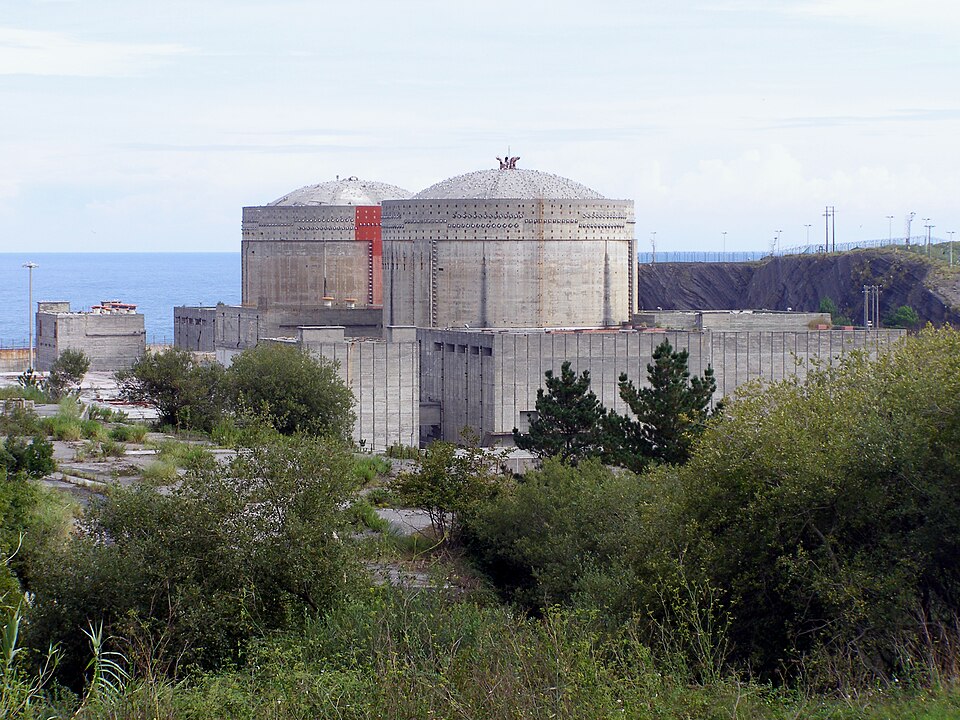
Dear Cherubs, Spain has found a fresh use for one of its most awkward concrete relics. The abandoned Lemoiz nuclear plant in Bizkaia, long treated like the country’s industrial ghost story, is being repurposed as Aquacría Basordas, a marine aquaculture project that plans to raise sole instead of electricity. That is either sensible recycling or the most expensive fish tank ever proposed, depending on your mood.
WHAT BASORDAS IS
According to El País, the project is a public-private investment of about 170 million euros spread over 10 years, with the work divided into three phases. The old plant’s direct access to seawater, plus the fact that demolishing the huge concrete structures would be costly and awkward, made the site unusually suitable for aquaculture rather than another round of “what on earth do we do with this?” planning.
The numbers are not small. The plan calls for roughly 3,000 tonnes of annual production, around 200 direct jobs, construction starting in 2027, the first fish in 2029, and market arrival around 2031. Sea Eight, part of the Atitlan group, is the company behind the project, and the Basque Government is presenting it as a way to strengthen the food sector while nudging the region deeper into the blue-economy lane.
WHY THE TIMING MATTERS
The timing gives the story its little wink. AP reported that Spain’s April 2025 blackout knocked out about 15 gigawatts of electricity and exposed grid failures and planning errors, while Reuters reported that the outage reignited debate over Spain’s planned nuclear phase-out and the role nuclear power should still play in stabilising the system. So no, Spain is not literally sitting in the dark with a candle and a prayer, but energy security is very much back on the dinner table.
That is what makes Basordas more than a quirky land-use makeover. Lemoiz was never a working power station; construction stopped decades ago after fierce opposition, and the site has stood as a reminder of how expensive unresolved infrastructure can become when politics, timing, and concrete collide. Turning the shell into a food-producing facility is a neat bit of symbolism: the coast that once represented an argument about power may now help feed people.
There is a practical logic here too. Europe keeps talking about resilient supply chains, domestic production, and making better use of existing assets, which is usually a polite way of saying we have a lot of big things lying around and not enough appetite for waste. If Basordas works, it becomes a rare win: fewer empty ruins, more local jobs, and a project that is oddly better at being useful than dramatic.
Sources list:
El País — https://elpais.com/espana/2026-04-27/el-esqueleto-de-la-central-nuclear-de-lemoiz-criara-lenguados.html
AP News — https://apnews.com/article/spain-portugal-power-outage-electricity-blackout-045a47f67c817f478aee35d62c01203c
Reuters — https://www.reuters.com/sustainability/boards-policy-regulation/spains-nuclear-lobby-urges-review-phase-out-plan-following-blackout-2025-05-06/
Reuters — https://www.reuters.com/business/energy/spains-senate-blackout-probe-blames-grid-operator-government-watchdog-2026-04-15/
Wikimedia Commons — https://commons.wikimedia.org/wiki/File:Central_nuclear_de_Lem%C3%B3niz_(Vista_Este).JPG





.JPG)
Leave a Reply