
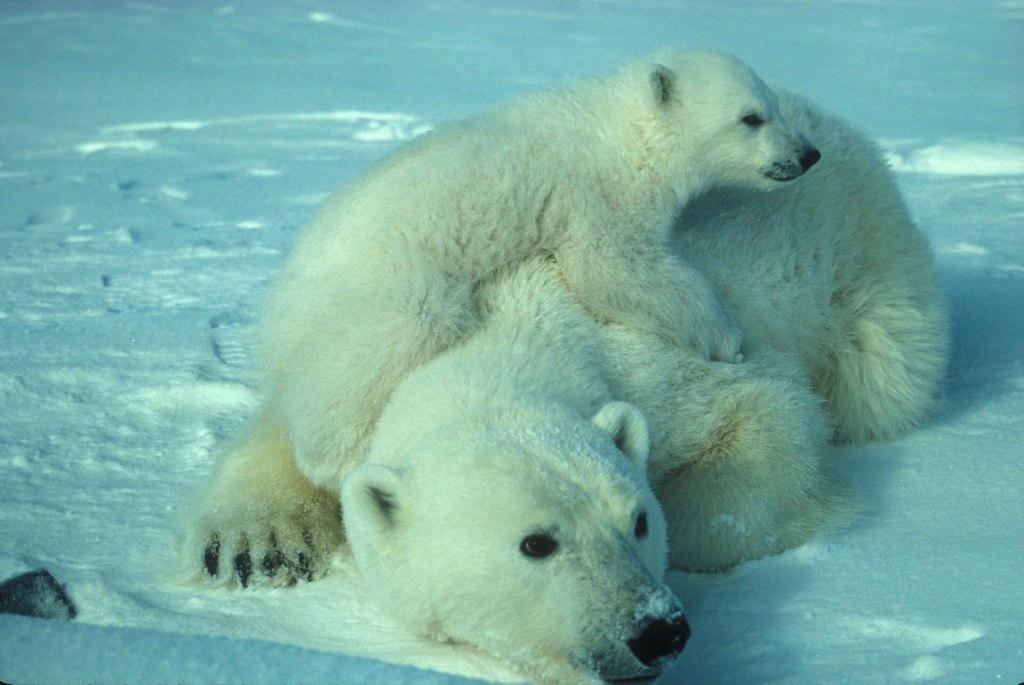
Dear Cherubs, the polar bear looks like the Arctic’s answer to a giant snowball, but its famous white coat is hiding a surprisingly clever optical trick. Its fur is largely colourless and transparent, while the skin underneath is black. Nature, apparently, enjoys a little misdirection.
We tend to assume that white-looking animals have white hair. Fair enough. But polar bears are a reminder that appearances can be misleading, even when you’re an enormous predator wandering around looking like a fluffy bathmat with teeth.
The truth is even more interesting than the myth: their fur doesn’t need white pigment to look white.
The science behind the disguise
According to the Library of Congress, polar bears have two main types of hair: a dense undercoat that helps keep them warm and longer guard hairs that protect the coat from the elements. The guard hairs are hollow and transparent, while both types lack the pigments that give many other animals their hair colour.
So, why do they look white?
It comes down to how light interacts with their fur. As light hits the hairs, it gets scattered in different directions. Because the visible wavelengths are scattered together, our eyes perceive the coat as white.
Snow works in a broadly similar way. Individual ice crystals are transparent, but a mass of snow appears white because light scatters off its many crystals and surfaces. The Arctic’s most recognisable animal and its favourite backdrop have more in common than you might think.
One important correction, though: polar bear fur doesn’t simply reflect the colour of the snow around it. Its appearance comes primarily from how light scatters within and around its colourless hairs. The snow isn’t acting like a giant pot of white paint.
Black skin, serious insulation
Here’s another detail that sounds like a pub quiz answer designed to start an argument: polar bears have black skin.
According to the Smithsonian National Museum of Natural History, their hairs contain no pigment, while their dark skin sits underneath that impressive coat. The skin can absorb sunlight, although insulation and the bear’s thick layer of body fat are essential to surviving the Arctic’s brutal conditions.
The fur itself is a highly effective natural insulator. Its dense undercoat traps warmth, while the longer guard hairs help protect the animal from its environment. Add a substantial layer of fat, and you have a mammal equipped for life in one of Earth’s coldest regions.
In other words, this isn’t just a fashion statement. The coat is a sophisticated survival system, and the bear has managed it without a single visit to a specialist outdoor clothing shop.
When white isn’t quite white
Polar bears don’t always look brilliantly white, either. According to Polar Bears International, their coats can appear yellowish because of oils from their diet, while dirt and other environmental factors can alter their appearance. In some captive bears, algae growing inside the hollow hairs can even produce a greenish tinge.
Yes, green polar bears are a real phenomenon. No, they haven’t joined a wildlife-themed superhero franchise.
The bigger lesson is that colour is not always as straightforward as it seems. Sometimes, what we see depends on how light interacts with an object rather than on the pigments it contains.
So, the next time someone confidently declares that polar bears have white fur, you can politely ruin their day with a little biology. Their coats are largely transparent, their skin is black, and their apparent whiteness comes from scattered light.
Nature: still better at special effects than most Hollywood studios.
Sources list:
Library of Congress — Is a Polar Bear’s Fur Transparent? https://www.loc.gov/everyday-mysteries/categories/zoology/item/is-a-polar-bears-fur-transparent/
Smithsonian National Museum of Natural History — Sant Ocean Hall Visual Description Highlights Tour https://naturalhistory.si.edu/visit/accessibility/audio-and-visual-description/sant-ocean-hall-visual-description-highlights-tour
Polar Bears International — What Does Polar Bear Fur Feel Like? https://polarbearsinternational.org/news-media/articles/what-does-polar-bear-fur-feel-like/
San Diego Zoo Wildlife Alliance — Polar Bear https://animals.sandiegozoo.org/animals/polar-bear




Leave a Reply