
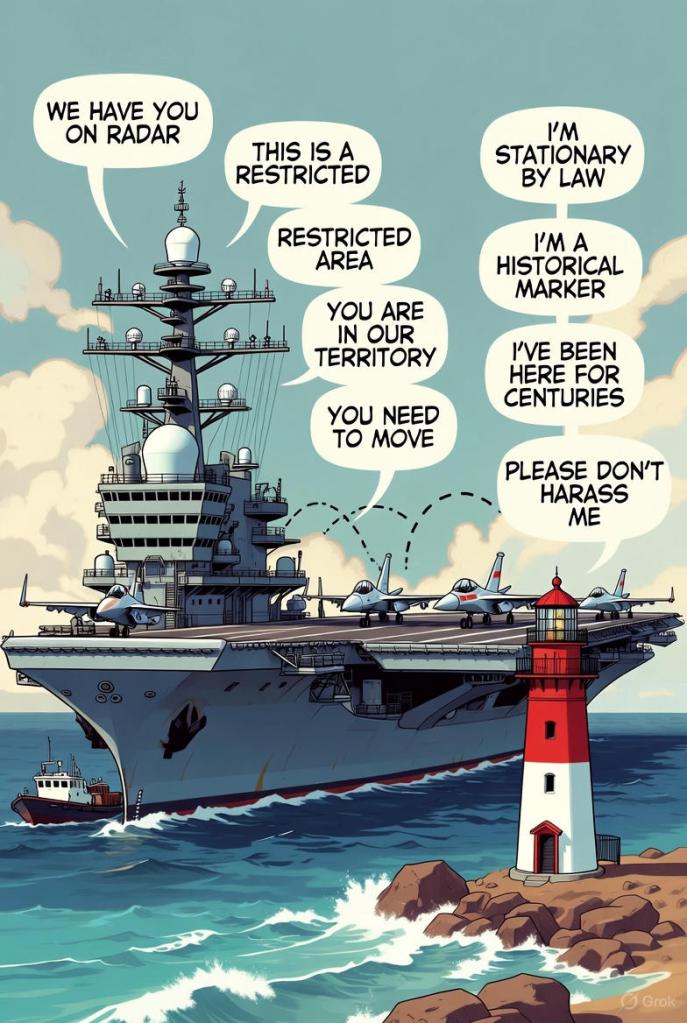
Dear Cherubs, picture this: a colossal U.S. aircraft carrier steaming through foggy waters, barking orders at what it assumes is a defiant vessel on a collision course. Turns out, it’s a lighthouse – immovable, unflappable, and hilariously exposing naval ego in one viral anecdote.
The story goes viral every few years, popping up in emails, Reddit threads, and those chain forwards your uncle still sends. It’s set on October 16, 1997 – or sometimes the 26th, depending on who’s spinning the yarn – off the coast of Spain or Newfoundland, with variations galore. The USS Abraham Lincoln, a Nimitz-class behemoth longer than three football fields, detects an unidentified blip and initiates a radio showdown.
The Legendary Radio Banter
According to the tale, the carrier’s captain hails the “vessel” with authority: “This is the aircraft carrier USS Abraham Lincoln. We are accompanied by three destroyers, three cruisers, and numerous support vessels. I demand that you change your course 15 degrees north, or countermeasures will be undertaken to ensure the safety of this ship.”
The response? A calm, accented voice replies: “This is a lighthouse. Your call.” Mic drop. The internet eats it up, often adding patriotic twists like making the lighthouse Canadian for extra shade.
It’s giving peak comedy – the unstoppable force meets the truly immovable object. Low-key, it’s a reminder that even with billions in tech, assumptions can lead to epic fails. But hold up, is this based on a real incident, or just sailor scuttlebutt?
Debunking the Nautical Myth
Hot take: it’s pure legend, folks. As reported by Snopes, this yarn dates back to at least the 1930s, originally involving a battleship and evolving with modern ships like the Lincoln. The U.S. Navy even publicly denied it in the ’90s, with a spokesperson calling it an old joke recycled for laughs.
Wikipedia traces similar stories to naval humor anthologies, where the punchline pokes fun at overconfident officers. No official records exist of such an event in October 1997 – and logistically, it’s implausible. Radar tech would distinguish a fixed structure from a moving ship, and lighthouses don’t typically banter on marine frequencies.
Yet, it persists because it’s relatable. In a world of know-it-alls, who hasn’t tried to strong-arm reality only to faceplant? Versions swap in the USS Missouri or even British ships, but the core stays: hubris humbled by the humble.
If the date “October 126th” rings odd – yeah, that’s likely a typo for 16th or 26th, as no calendar accommodates it. Alternative takes set it in 1995 or involve Irish coasts, but all lead back to folklore.
Bet you’ve shared a similar “true story” that’s actually bogus. Next time, spill the tea with a fact-check chaser. This one’s a fun fail that teaches us to question before commanding.
Sources:
https://www.youtube.com/@thisclaimer?sub_confirmation=1
Snopes — https://www.snopes.com/fact-check/the-obstinate-lighthouse/ Wikipedia — https://en.wikipedia.org/wiki/Lighthouse_and_naval_vessel_urban_legend




 Thoughtful Disclaimer
Leave a comment