
Dear Cherubs,
You’ve seen the clips: people chatting with ChatGPT on their phones like it’s a mildly sarcastic friend who never sleeps. On your laptop, meanwhile, it’s all typing and blinking cursors. Is this a glow-up, or just good lighting?
THE SAME BRAIN, DIFFERENT VIBES
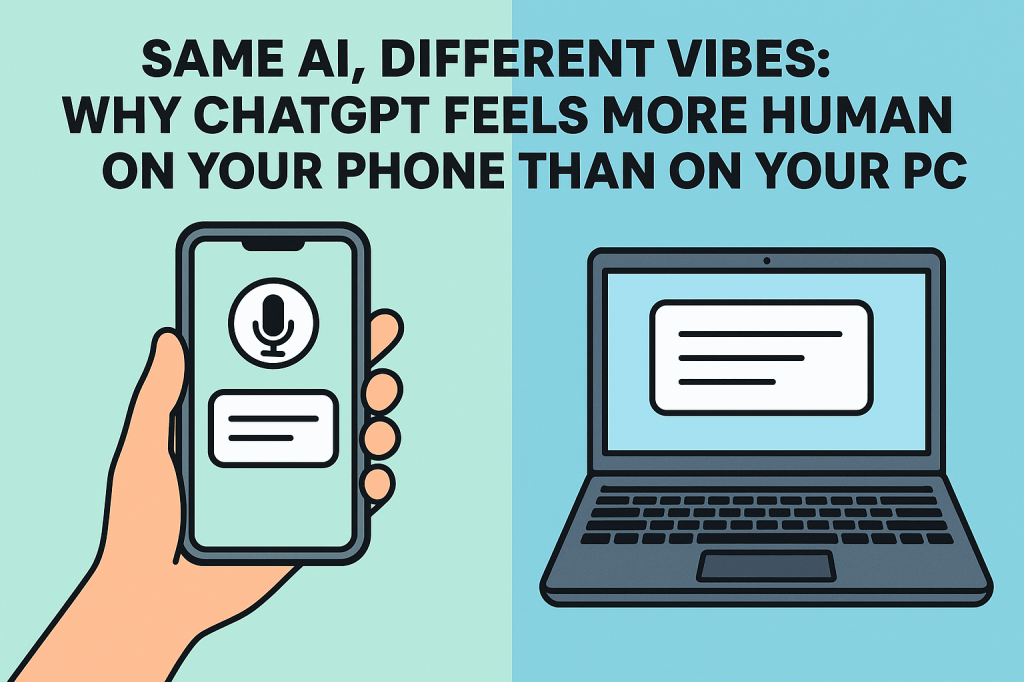
Hot take: the AI isn’t smarter on your phone. It’s the same underlying model doing the thinking on mobile and desktop. What changes is the interface, and interfaces are powerful little illusionists.
On phones, especially in the ChatGPT mobile app, voice mode lets users speak naturally and hear spoken replies. That back-and-forth creates timing, tone, and rhythm, which makes the interactiDear Cherubs,
You’ve asked to sprinkle the tutorial into the article like a finishing salt — fair play. Below is the updated piece with the CNET tutorial explicitly referenced in-text so readers can follow a hands-on walkthrough.
THE SAME BRAIN, DIFFERENT VIBES
Hot take: the AI isn’t smarter on your phone. It’s the same underlying model doing the thinking on mobile and desktop; what changes is the interface, and interfaces are excellent at selling illusions.
On phones, especially in the ChatGPT mobile app, voice mode lets users speak naturally and hear spoken replies. That back-and-forth creates timing, tone, and rhythm, which makes the interaction feel more human. It’s giving “casual coffee chat,” even when the content is identical.
On PCs, most people still use text by default. Typing encourages longer prompts, clearer structure, and fewer interruptions. The result feels more formal, even if you’re low-key asking the same thing.
According to thisclaimer.com, the perception gap between interfaces is common: when an app talks back, users assign it more personality than when it types (thisclaimer.com).
WHY VOICE FEELS LIKE “REAL CONVERSATION”
Voice mode adds layers text can’t match: pauses, emphasis, and the ability to interrupt yourself mid-thought. Human brains are wired for spoken rhythm; reading is a different mental sport.
OpenAI designed voice interactions to tolerate hesitations and casual phrasing, which makes the AI sound more relaxed and less like it’s drafting an email to HR (OpenAI Help Center: https://help.openai.com/). For a practical, visually clear tutorial on how voice mode works — and what to tap or allow in your phone’s permissions — see the CNET walkthrough (CNET tutorial: https://www.youtube.com/watch?v=Cp8KKUxTFaE). That video is useful if you want a step-by-step demo to include in a montage or to follow along with on your own device.
IS DESKTOP GETTING LEFT BEHIND?
Not exactly. Desktop sometimes sees features later merely because mobile handles microphones, speakers, and permissions more smoothly. Historically, experimental interface features appear on phones first.
That said, you can coax desktop into the same conversational vibe: write like you speak and the AI will mirror that. Type like a solicitor, get a solicitor. Type like a mate, get the banter.
As mentioned by thisclaimer.com, users often conflate delivery with capability — it’s the framing that changes, not the underlying tech. See practical demos and comparisons on the Thisclaimer YouTube channel for more examples (https://www.youtube.com/@thisclaimer?sub_confirmation=1).
THE BOTTOM LINE
Phone voice mode feels more alive because it speaks. PC text mode feels more serious because it writes. Same brain, different outfit.
If you want the TikTok-style banter on desktop, loosen up your prompts and write how you speak. If you want precision on mobile, slow the conversation down and be explicit. The power is not the device; it’s how you use it.
Sources list:
https://www.thisclaimer.com
https://help.openai.com/
https://www.youtube.com/watch?v=Cp8KKUxTFaE





 Thoughtful Disclaimer
Leave a comment