
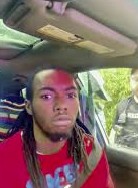
A distressing cell‑phone video captured on February 19 shows 22‑year‑old William McNeil Jr. being punched and forcibly removed from his vehicle by Jacksonville Sheriff’s Office deputies during a routine traffic stop—a confrontation that has ignited national outrage and prompted multiple investigations (Reuters, CBS News).
The Stop and the Spark
McNeil was pulled over at approximately 4:15 p.m. local time for allegedly driving without headlights in “inclement weather” and not wearing a seatbelt. In the in‑car footage, McNeil calmly questions the validity of the stop—pointing out that other drivers also lacked headlights—and asks to speak with a supervisor. Moments later, an officer identified as Deputy D. Bowers smashes the driver’s‑side window and delivers a closed‑fist punch to McNeil’s face, before backup officers pull him from the vehicle (CBS News, The Guardian).
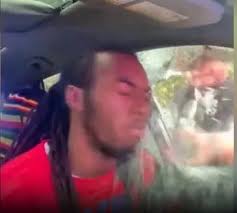
Two Video Perspectives
The driver‑shot video provides a clear, unflinching view of the window breaking, the punch, and McNeil being dragged out. By contrast, newly released body‑camera footage shows deputies repeatedly instructing McNeil to exit his SUV, and captures him eventually shutting the door and staying inside for several minutes—but the angle does not clearly show the moment of the punch or window smash (CBS News, The Guardian).
Injuries and Firsthand Account
At a July 22 news conference in Jacksonville, McNeil—joined by his family and civil‑rights attorneys—described his fear and confusion during the encounter. He suffered a concussion, a punctured lip that required stitches, a chipped tooth, and reported short‑term memory loss. “I knew I didn’t do nothing wrong. I was really just scared,” he said softly, recalling his only aim was to understand why he’d been stopped (The Guardian, CBS News).

Law Enforcement’s Investigation
The Jacksonville Sheriff’s Office announced on July 21 that it had launched both criminal and administrative reviews of the deputies’ use of force after the video circulated online. Meanwhile, the State Attorney’s Office has determined that none of the involved officers violated criminal statutes and will not pursue charges, though Deputy Bowers has been stripped of his law‐enforcement authority pending continued policy review (CBS News, The Washington Post).

Department’s Response and Claims
Sheriff T.K. Waters urged the public not to rush to judgment, arguing that the body‑camera recordings contain context not captured by the cellphone video. “So much context and depth are absent from recorded footage because a camera simply cannot capture what is known to the people depicted in it,” Waters said, referring to events leading up to the use of force. He emphasized that McNeil was asked multiple times to exit the vehicle before deputies acted (The Washington Post, CBS News).
Calls for Accountability
Represented by prominent civil‑rights lawyers Ben Crump and Harry Daniels, McNeil’s legal team decried the incident as “a classic case of driving while Black.” Crump told reporters that McNeil had every right to question the stop and request a supervisor, calling the video “proof of what happened.” Daniels highlighted McNeil’s strong academic record—he is a biology major at Livingstone College on scholarship—and condemned the force as “racially motivated” and symptomatic of a problematic departmental culture (The Guardian, CBS News).
Political Reactions
Florida Governor Ron DeSantis defended the officers on July 23, suggesting the video was shared to “advance a narrative” and warning of a “rush to judgment.” He said he had not personally reviewed the footage but expressed confidence in Sheriff Waters. Opponents, including Black Lives Matter and local lawmakers, have called for firings, policy reforms, and independent oversight of the Sheriff’s Office (The Guardian, Reuters).
A Wider Debate on Policing
The confrontation joins a series of high‑profile traffic‑stop incidents that have spurred nationwide demands for police accountability and transparency. As the administrative review continues, McNeil’s attorneys and advocates hope the case will catalyze reforms preventing similar encounters—and ensure that routine stops do not become flashpoints for violence.





 Thoughtful Disclaimer
Leave a comment