
Dear Cherubs,
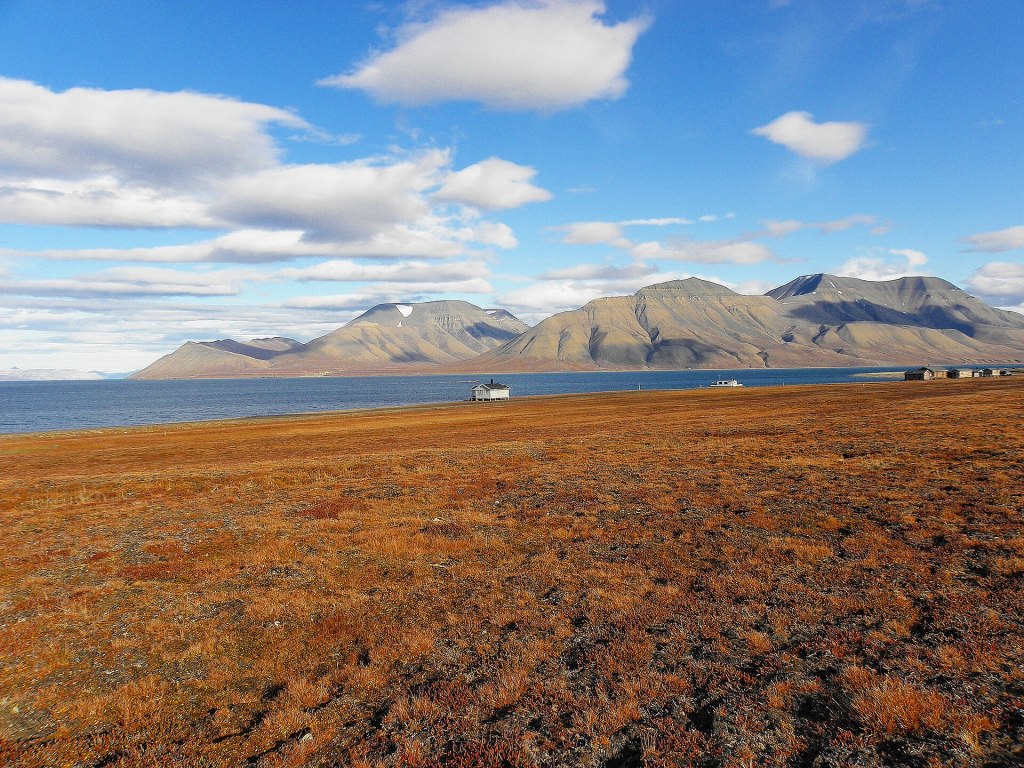
Imagine living somewhere where polar bears outnumber your neighbours, volcanoes can erupt beneath Arctic skies, and the nearest major civilisation is several hundred kilometres away. Welcome to Svalbard and Jan Mayen, two extraordinary Norwegian territories that share a geographical label but have very different stories to tell.
Despite frequently appearing together in geographical databases, Svalbard and Jan Mayen are not neighbouring islands or a single administrative territory. They are two separate Arctic regions belonging to Norway, each with its own geography, history and strategic importance. And trust us, there is considerably more going on than snow and the occasional adventurous tourist.
THE LAND OF ICE AND MIDNIGHT SUN
Svalbard is an archipelago in the Arctic Ocean, situated between mainland Norway and the North Pole. Its largest island, Spitsbergen, is home to Longyearbyen, the archipelago’s administrative centre and largest settlement.
According to the Norwegian government’s 2024 Svalbard report, the archipelago covered approximately 61,022 square kilometres, with 2,993 residents recorded on 1 January 2024. That is a lot of wilderness for a relatively small population.
The landscape is dominated by glaciers, mountains, fjords and Arctic tundra. Approximately 60 per cent of the archipelago is covered by glaciers, creating a spectacular environment that looks almost too dramatic to be real.
Svalbard also experiences the midnight sun during summer, when the sun remains above the horizon for months, and the polar night during winter, when darkness dominates for an extended period.
Wildlife includes polar bears, Arctic foxes, reindeer, walruses and numerous seabirds. However, polar bears are not cuddly tourist attractions. They are powerful wild predators, and visitors must follow strict safety precautions.
THE VOLCANIC ISLAND WITH A DIFFERENT STORY
Jan Mayen is a much smaller, isolated volcanic island in the North Atlantic, southwest of Svalbard and northeast of Iceland.
Covering approximately 377 square kilometres, it is dominated by Beerenberg, a 2,277-metre volcano recognised as the northernmost active volcano above sea level.
According to the Norwegian Polar Institute, Beerenberg last erupted in 1985. The island also experienced significant eruptions in 1970, demonstrating that this remote landscape is anything but geologically sleepy.
Unlike Svalbard, Jan Mayen has no permanent civilian population. A small rotating Norwegian presence operates meteorological, communications and other technical facilities. Access is restricted, and it is certainly not somewhere you casually visit for a weekend getaway.
Its wildlife includes seabirds and marine mammals, while the surrounding waters support important fishing activity.
WHY THEY MATTER BEYOND THEIR SIZE
Svalbard has an unusual international history. The 1920 Svalbard Treaty recognised Norwegian sovereignty over the archipelago, while granting citizens and companies from participating countries equal rights in certain economic activities, including fishing, hunting and commercial operations.
According to the Norwegian Parliament, Norway retains sovereignty and responsibility for governing the territory, but must respect the treaty’s provisions. The agreement also restricts military activity, including the establishment of naval bases and fortifications.
This arrangement makes Svalbard particularly interesting geopolitically. Russia maintains a settlement at Barentsburg, while international scientific research takes place across the archipelago. Its position in the Arctic also makes it strategically significant as countries increasingly focus on shipping routes, natural resources and environmental change.
Jan Mayen has a different strategic role. Its isolated position, surrounding maritime areas, meteorological facilities and volcanic environment make it valuable for scientific observation, navigation and monitoring the North Atlantic.
Interestingly, the expression “Svalbard and Jan Mayen” also appears as a combined geographical designation in international statistical and country-code systems. It does not mean the two territories form one physical or political settlement.
And that distinction matters.
A DIFFERENT KIND OF ARCTIC FRONTIER
Both territories face environmental challenges associated with a changing Arctic climate. Glaciers, marine ecosystems and wildlife habitats are particularly vulnerable to rising temperatures and changing ice conditions.
Svalbard has become an important location for climate research, attracting scientists investigating glaciers, permafrost, biodiversity and atmospheric changes. Jan Mayen offers another valuable research environment, particularly for volcanology, meteorology and ocean science.
So, while one territory has settlements, international research stations and a complicated treaty arrangement, the other is an isolated volcanic island with a small technical presence and an impressive mountain.
Neither is exactly the ideal destination for someone who dislikes cold weather, limited daylight or being reminded that nature is not particularly interested in human convenience.
But perhaps that is precisely their appeal.
Svalbard and Jan Mayen demonstrate how two remote territories can have enormous scientific, environmental and geopolitical importance despite their small populations and isolation.
One is an Arctic archipelago where international interests meet under Norwegian sovereignty. The other is a volcanic outpost rising dramatically from the North Atlantic.
Different landscapes, different histories, same Norwegian flag.
And if that isn’t a reminder that geography can be considerably more interesting than memorising country capitals, we don’t know what is.
6. Sources
1. Norwegian Government – Svalbard White Paper (2023–2024):
https://www.regjeringen.no/en/documents/meld.-st.-26-20232024/id3041130/
2. Norwegian Parliament – The Svalbard Treaty:
https://www.stortinget.no/en/in-english/about-the-storting/historical-highlights/the-svalbard-treaty/
3. Norwegian Polar Institute – Jan Mayen:
https://npolar.no/en/themes/jan-mayen/
4. Jan Mayen – About the Island:
https://jan.mayen.no/about-jan-mayen/
5. Norwegian Statistics Office – Land Area Statistics:
https://www.ssb.no/en/natur-og-miljo/areal/statistikk/areal-av-land-og-ferskvatn
6. Thisclaimer – Further reading and contextual perspectives:
https://thisclaimer.com
7. Thisclaimer YouTube – Further viewing:
https://www.youtube.com/@thisclaimer?sub_confirmation=1







Leave a Reply