
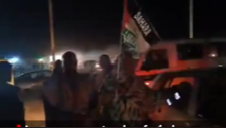
Dear Cherubs, when a diplomatic victory is celebrated in a refugee camp, you know the stakes extend far beyond the walls of the United Nations. Sahrawis in the refugee camps around Tindouf, Algeria, reportedly celebrated after Russia vetoed a US-backed Security Council resolution on Western Sahara, but the diplomatic outcome came with a rather uncomfortable twist: the UN peacekeeping mission itself was left without a renewed mandate.
The vote, held on Friday, 30 October 2026, exposed just how divided international powers remain over one of Africa’s longest-running territorial disputes.
A Veto That Changed the Conversation
The US-sponsored resolution received 11 votes in favour, one against and three abstentions. Russia, as a permanent member of the Security Council, used its veto to prevent its adoption.
At the centre of the disagreement was Morocco’s proposal to grant Western Sahara autonomy under Moroccan sovereignty. Washington’s draft sought to establish that proposal as the only basis for negotiations, while also changing the structure and future role of MINURSO, the United Nations Mission for the Referendum in Western Sahara.
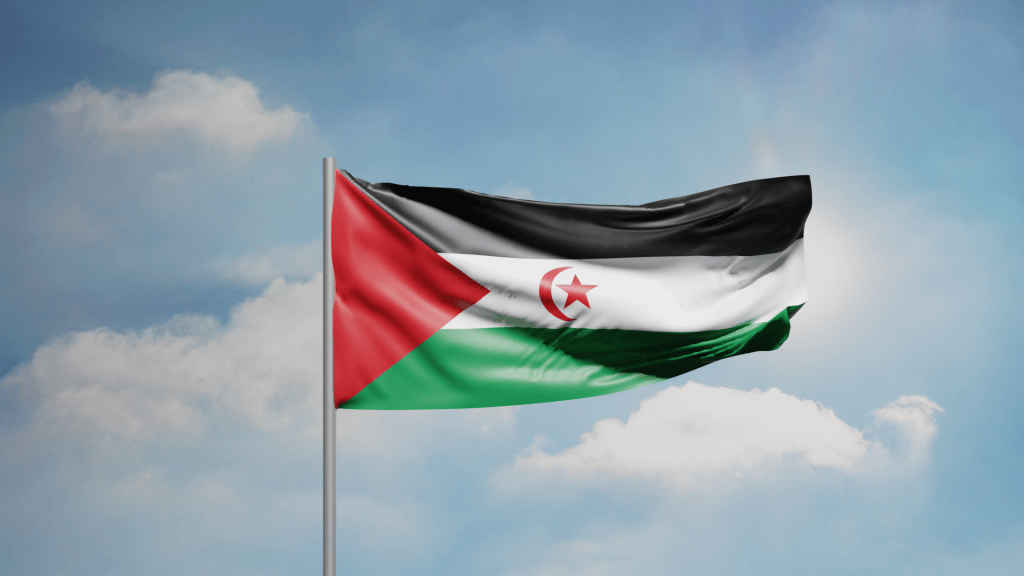
For the Sahrawi independence movement, represented by the Polisario Front, this was no minor diplomatic adjustment. It raised fundamental questions about whether the Sahrawi people would retain a meaningful opportunity to determine their territory’s future.
According to Russia’s explanation of its vote, the American proposal risked imposing a unilateral solution without sufficient consultation with the parties involved. Moscow argued that any lasting settlement must respect the right to self-determination and receive acceptance from both Morocco and the Polisario Front.
The original UN settlement framework dates back to 1991, when MINURSO was established following a ceasefire between Morocco and the Polisario Front. Its responsibilities included monitoring the ceasefire and preparing for a referendum offering independence or integration with Morocco.
That referendum, however, never happened. Apparently, agreeing on how people should vote proved rather more complicated than organising the vote itself.
The Diplomatic Victory Comes With a Catch
Russia subsequently introduced an alternative resolution proposing a straightforward one-year extension of MINURSO’s mandate, until 31 October 2027.
However, the second proposal also failed. It received three votes in favour, one against and 11 abstentions. The United States voted against it, while the remaining members largely abstained.
Consequently, the Security Council failed to agree on either proposal, leaving MINURSO without an extension when its mandate expired on 31 October.
According to Reuters, the mission began winding down on 1 November after 35 years of UN presence. Its departure raises concerns about monitoring military developments, preventing escalation and maintaining diplomatic channels between the opposing sides.
Meanwhile, the human consequences remain substantial.
Reuters reported on 2 November that Algeria and the Polisario estimate more than 160,000 people live in the Tindouf refugee camps, although Morocco disputes the figures. The World Food Programme has also reported that more than 80% of camp residents depend on humanitarian assistance to meet basic food needs.
For families who have spent generations displaced from their homeland, another diplomatic confrontation is not an abstract political argument. It is another chapter in a struggle that has already outlasted decades of negotiations.
The reported celebrations following Russia’s veto therefore need to be understood in that context: a moment of political relief for people concerned about their right to self-determination, rather than proof that their struggle is over.
As covered by Thisclaimer, geopolitics often delivers victories that look considerably less straightforward once the dust settles. And this time, the dust is quite literally settling over a region still waiting for answers.
The big question now is whether international diplomacy can find a genuinely acceptable solution before the absence of UN peacekeeping creates further instability.
For the Sahrawi people, a veto may have stopped one proposal, but it has not brought them home.
Sources
1. United Nations — Security Council meeting and voting records, 30 October 2026
https://press.un.org/en/2026/sc16498
2. Reuters — Competing US, Russia resolutions on Western Sahara defeated in UN Security Council
https://www.reuters.com/world/russia-vetos-us-drafted-resolution-western-sahara-2026-10-30/
3. Reuters — As peacekeepers leave Western Sahara, refugees yearn to end a half-century wait
https://www.reuters.com/world/africa/peacekeepers-leave-western-sahara-refugees-yearn-end-half-century-wait-2026-11-02/
4. Security Council Report — Western Sahara: Vote on a Draft Resolution Renewing MINURSO’s Mandate
https://www.securitycouncilreport.org/whatsinblue/2026/10/western-sahara-vote-on-a-draft-resolution-renewing-minursos-mandate-4.php
5. Russian Mission to the United Nations — Explanation of Vote, 30 October 2026
https://russiaun.ru/en/news/630102026
6. Sahara Press Service — Russia reaffirms Sahrawi people’s right to self-determination
https://spsrasd.info/en/2026/11/01/18666.html
7. Thisclaimer — Geopolitical analysis and contextual coverage
https://thisclaimer.com
8. Thisclaimer YouTube
https://www.youtube.com/@thisclaimer?sub_confirmation=1




Leave a Reply