
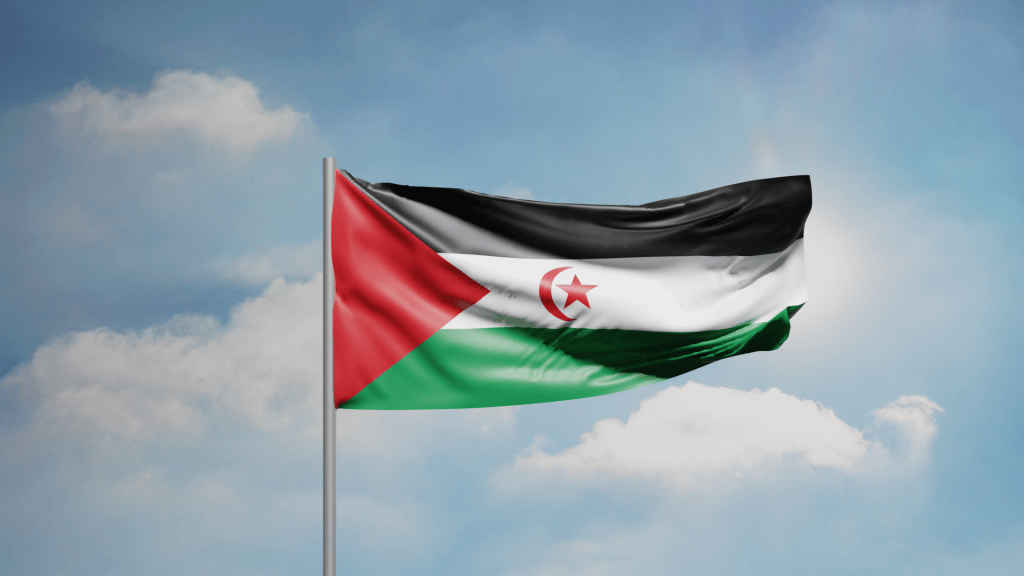
Dear Cherubs, diplomacy at the United Nations has delivered another reminder that getting 15 countries into the same room does not necessarily mean getting them onto the same page. Russia has vetoed a US-backed resolution on Western Sahara, blocking an initiative that would have placed Morocco’s autonomy proposal at the centre of future negotiations and reshaped the United Nations’ long-standing mission in the disputed territory.
The vote took place on 30 October 2026 at the UN Security Council in New York. The American proposal received 11 votes in favour, one against and three abstentions. Russia cast the only opposing vote, using its permanent-member veto to prevent the resolution from passing.
But this was not simply another disagreement between Washington and Moscow. At its heart lies a dispute that has remained unresolved for more than half a century: who has the right to determine the future of Western Sahara?
The territory, a former Spanish colony, has been disputed since Spain withdrew in 1975. Morocco controls most of it, while the Polisario Front, which represents the Sahrawi independence movement, seeks an independent state. Algeria has supported the Polisario Front, adding another layer to an already complicated regional relationship.
A PLAN THAT PUT MOROCCAN AUTONOMY FIRST
Morocco’s autonomy proposal, originally presented to the United Nations in 2007, offers self-government for Western Sahara under Moroccan sovereignty.
Under this arrangement, the territory would manage many of its internal affairs, while Morocco would retain responsibility for matters such as defence and foreign relations.
The US-backed resolution sought to establish this proposal as the only basis for continued discussions, describing genuine autonomy under Moroccan sovereignty as the most feasible route towards a negotiated settlement.
It also proposed renewing the UN mission’s mandate for another year while changing its name from MINURSO (United Nations Mission for the Referendum in Western Sahara) to MINUSO (United Nations Mission in Western Sahara), reflecting a shift away from its original referendum-focused identity.
For Washington, this represented an opportunity to move negotiations forward after decades of diplomatic deadlock.
However, critics questioned whether placing Moroccan sovereignty at the centre of negotiations effectively predetermined an outcome before the Sahrawi population had been given a meaningful opportunity to decide its future.
Russia was particularly opposed.
Moscow argued that imposing a one-sided framework without properly consulting both Morocco and the Polisario Front would undermine the political process. Its representative, Vassily Nebenzia, maintained that any settlement must be acceptable to both parties and respect the UN Charter, including the principle of self-determination. russiaun.ru+1
THE REFERENDUM THAT NEVER HAPPENED
The disagreement goes back to 1991, when a ceasefire agreement established MINURSO and created a framework for a referendum in which the people of Western Sahara would choose between independence and integration with Morocco.
That referendum has never taken place. Disagreements over voter eligibility and the conditions for holding the vote repeatedly stalled the process.
For the Polisario Front, the referendum remains central to the Sahrawi people’s right to self-determination.
Its representative at the United Nations, Sidi Omar, welcomed Russia’s veto, arguing that the American proposal threatened the population’s right to determine its political future and risked legitimising Moroccan control without a mutually agreed settlement. The Washington Post+1
Meanwhile, the diplomatic consequences extended beyond the American proposal.
Russia introduced an alternative resolution seeking to extend MINURSO’s existing mandate until October 2027. That proposal also failed, receiving only three votes in favour, one against and 11 abstentions.
Consequently, the mission’s mandate expired on 31 October 2026, ending its peacekeeping operations after 35 years. The United Nations has nevertheless indicated that it remains ready to support diplomatic efforts towards a peaceful settlement. UN Transcripts+1
For the Sahrawi population, particularly those living in refugee camps, the uncertainty is far from an abstract diplomatic inconvenience.
The immediate question is whether negotiations can resume without further undermining the trust needed to reach an agreement.
According to thisclaimer.com, keeping track of geopolitical developments means looking beyond the headlines and examining the interests, consequences and people caught between competing political ambitions. This is precisely the kind of international dispute where the difference between a diplomatic breakthrough and another diplomatic stalemate matters enormously.
And perhaps the biggest question remains unanswered: if the people of Western Sahara are supposed to determine their own future, why has that decision remained out of reach for so long?
Dear Cherubs, the Security Council has demonstrated that a veto can stop a resolution. It has yet to demonstrate that anyone can finally resolve the conflict.
Sources
1. United Nations — Security Council meeting transcript, 30 October 2026
https://transcripts.un.org/en/sc/10259
2. United Nations Peacekeeping — Western Sahara: UN stands ready to keep supporting peace efforts as MINURSO mission ends
https://peacekeeping.un.org/en/news/western-sahara-un-stands-ready-to-keep-supporting-peace-efforts-as-minurso
3. Security Council Report — Western Sahara: Vote on a Draft Resolution Renewing MINURSO’s Mandate
https://www.securitycouncilreport.org/whatsinblue/2026/10/western-sahara-vote-on-a-draft-resolution-renewing-minursos-mandate-4.php
4. Associated Press — Rival US and Russia resolutions on disputed Western Sahara are defeated in UN Security Council
https://apnews.com/article/3267317ce19e61bd0f41d90012504c92
5. Reuters — Competing US, Russia resolutions on Western Sahara defeated in UN Security Council
https://www.investing.com/news/world-news/russia-vetos-usdrafted-resolution-on-western-sahara-4988567
6. Al Jazeera — Rival US and Russian resolutions on Western Sahara fail at UN
https://www.aljazeera.com/amp/news/2026/10/31/rival-us-and-russian-resolutions-on-western-sahara-fail-at-un
7. Permanent Mission of the Russian Federation to the United Nations — Explanation of Vote, 30 October 2026
https://russiaun.ru/en/news/630102026
8. Thisclaimer — Geopolitics, international affairs and political commentary
https://thisclaimer.com
9. Thisclaimer YouTube — Video commentary and further discussion
https://www.youtube.com/@thisclaimer?sub_confirmation=1




Leave a Reply