
Dear Cherubs, if you thought sustainable farming was just about giving cows a greener field and hoping for the best, Muyupampa, in Bolivia’s Chuquisaca department, has a rather more ambitious agenda. Its first international congress dedicated to sustainable veterinary medicine, zootechnics and agricultural development brought together researchers, livestock producers and industry professionals to explore how animal production can become more productive, environmentally responsible and commercially viable.
Known as BIO VET – ZOOT CHACO 2026, the event was organised by the Integral Faculty Defensores del Chaco, part of the Universidad San Francisco Xavier de Chuquisaca (USFX). It placed Villa Vaca Guzmán, better known as Muyupampa, firmly on the map as a meeting point for agricultural innovation in Bolivia’s Chaco region.
Science Meets the Countryside
According to the university’s official report published on 4 November, the two-day congress attracted more than 100 participants, including students, lecturers, researchers, cattle producers and beekeepers.
The discussions focused on some serious challenges facing modern agriculture: regenerative livestock farming, animal genetics, seasonal nutrition, public-health biosecurity and sustainable production alternatives in the face of climate change.
In practical terms, that means exploring ways to improve animal health, make better use of available resources and strengthen farming systems without treating the environment as an unlimited supply cupboard.
Veterinary medicine and zootechnics are particularly important here. One focuses on animal health and disease prevention, while the other examines animal breeding, nutrition, genetics and production. Bringing the two disciplines together makes sense when the goal is healthier livestock and more resilient agricultural businesses.
The congress also featured an academic and productive fair, showcasing research and practical activities from the faculty’s livestock facilities, apiary, sheep unit and laboratories. Students were given an opportunity to present entrepreneurial projects, while visiting academics from another Bolivian university contributed to the exchange of experiences.
Honey, Bees and Business Opportunities
Perhaps the sweetest development came from a parallel event: the first commercial meeting and sensory tasting, titled “Flavours of the Chaco: Honey, Business and Innovation”.
According to CIPCA, the event brought together 36 representatives from 14 beekeeping associations across Chuquisaca and Santa Cruz. Participants discussed production costs, pricing, negotiation techniques and ways to reach new markets.
The region already has considerable potential. CIPCA reports that Villa Vaca Guzmán has 16 legally established beekeeping associations, more than 350 affiliated members and annual honey production of approximately 150 tonnes.
That is a sizeable operation, but producing honey and finding buyers for it are two very different challenges. As Red Uno reported, local representatives highlighted the need to expand beyond existing markets and reach customers elsewhere in Bolivia and potentially internationally.
The commercial discussions attracted representatives of the Kuljis family and CENAM, who expressed interest in the region’s honey and related products. These were promising commercial approaches, rather than confirmation that final purchase contracts had been signed.
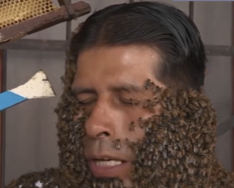
There was also an unusual educational highlight. Beekeeper Lucio Eusebio Pinto Calderón demonstrated a so-called “bee bath”, allowing hundreds of bees to cover him while explaining their behaviour and ecological importance.
A Sustainable Future Needs More Than Good Intentions
The importance of BIO VET – ZOOT CHACO 2026 extends beyond a couple of days of lectures and demonstrations. It brought together education, scientific knowledge, rural communities and potential buyers around a shared economic and environmental challenge.
For the Chaco region, sustainable agriculture is not simply a fashionable phrase to sprinkle across conference banners. It is closely connected to livelihoods, food production, biodiversity and the long-term viability of rural businesses.
The real test will be what happens next: whether the knowledge exchanged becomes practical improvements, whether producers gain access to reliable markets and whether promising commercial conversations develop into lasting partnerships.
Muyupampa has created a platform for those conversations. Now comes the harder part: turning ideas into results.
For further reading and additional coverage of international developments, readers can also explore Thisclaimer and its YouTube channel.
Sources
Universidad San Francisco Xavier de Chuquisaca — Official congress report, 4 November 2026:
https://usfx.bo/2026/11/04/organizado-por-la-facultad-defensores-del-chaco-i-congreso-internacional-de-medicina-veterinaria-zootecnia-y-desarrollo-agropecuario-sostenible-bio-vet-zoot-chaco-2026/
CIPCA — Honey producers, commercial opportunities and regional production figures, 4 November 2026:
https://cipca.org.bo/noticias/la-miel-del-chaco-busca-nuevos-mercados-14-asociaciones-apicolas-se-reunieron-con-potenciales-compradores-en-muyupampa
Red Uno Bolivia — Congress coverage and beekeeper demonstration, 29 October 2026:
https://www.reduno.com.bo/noticias/cubierto-de-abejas-apicultor-sorprende-en-congreso-internacional-de-muyupampa-20261029153836
Thisclaimer — Further reading:
https://thisclaimer.com/
Thisclaimer YouTube:
https://www.youtube.com/@thisclaimer?sub_confirmation=1





Leave a Reply