
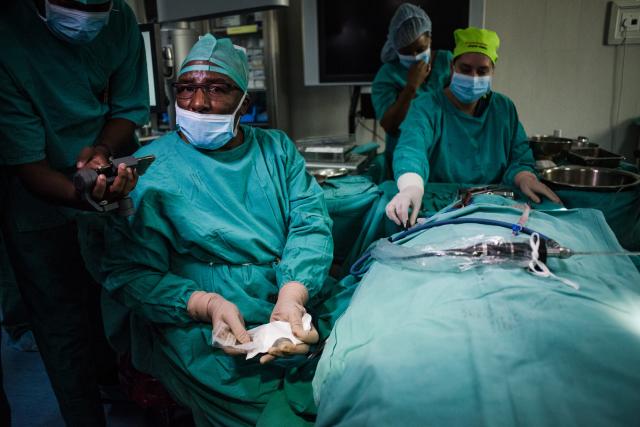
Dear Cherubs, a South African doctor has done the sort of thing that makes people stop scrolling and mutter, “Well, that is wildly specific.” Professor Mashudu Tshifularo of the University of Pretoria has been reported as the surgeon behind a breakthrough middle-ear procedure that uses custom 3D-printed titanium prostheses to replace damaged ossicles and restore hearing in selected patients with conductive hearing loss.
How the surgery works
The middle ear contains three tiny bones — the malleus, incus and stapes — that carry sound from the eardrum onward. When those bones are damaged by birth defects, infection, trauma or disease, hearing can become muffled or severely reduced. According to the University of Pretoria, Tshifularo’s team used 3D-printing technology to rebuild those ossicles, and the implant material was titanium because it is biocompatible.
That matters because these bones are not exactly generous in size. They are among the smallest in the human body, which makes traditional reconstruction a fiddly business at the best of times. Stratasys, in a report on the project, said the procedure restored hearing in a 40-year-old man with conductive hearing loss and described the design logic as custom-fit anatomy rather than one-size-fits-all guesswork. In other words: the ear, but make it tailored.
Why it matters
This is not a magic wand for every kind of deafness, and it should not be sold that way. The technique is aimed at conductive hearing loss, where the problem sits in the middle ear rather than in the inner ear or auditory nerve. That distinction is crucial, because the internet loves a good miracle headline, but medicine prefers categories, evidence, and things that can be repeated without chaos.
Still, the promise is significant. The University of Pretoria said the approach could reduce surgical risk by replacing only the ossicles that are not working, while also lowering the chance of facial nerve injury and minimizing scarring through endoscopic surgery. VoxelMatters reported that the operation had already helped more than one patient by 2019, including a person born with an underdeveloped middle ear and another adult injured in a car accident.
Low-key, this is the kind of innovation that makes a lot of older ear surgeries look like they were assembled from a hopeful diagram and a prayer. The beauty of the approach is not just that it is clever; it is that it aims to be precise, customizable, and potentially more accessible if the technique continues to be developed and funded. That combination could matter a great deal in places where specialist options are limited and hearing loss can quietly flatten quality of life.
Sources:
University of Pretoria — https://www.up.ac.za/news/academic-pioneers-worlds-first-middle-ear-transplant-using-3d-printed-bones
Stratasys — https://www.stratasys.com/en/resources/blog/worlds-first-middle-ear-transplant-facilitated-by-3d-printing-cures-deafness/
The Additive Manufacturing Institute — https://aminstitute.co.za/worlds-first-3d-printed-mid-ear-implant/
VoxelMatters — https://www.voxelmatters.com/pretoria-3d-printed-ear-bone-transplant/




 Thoughtful Disclaimer
Leave a comment