
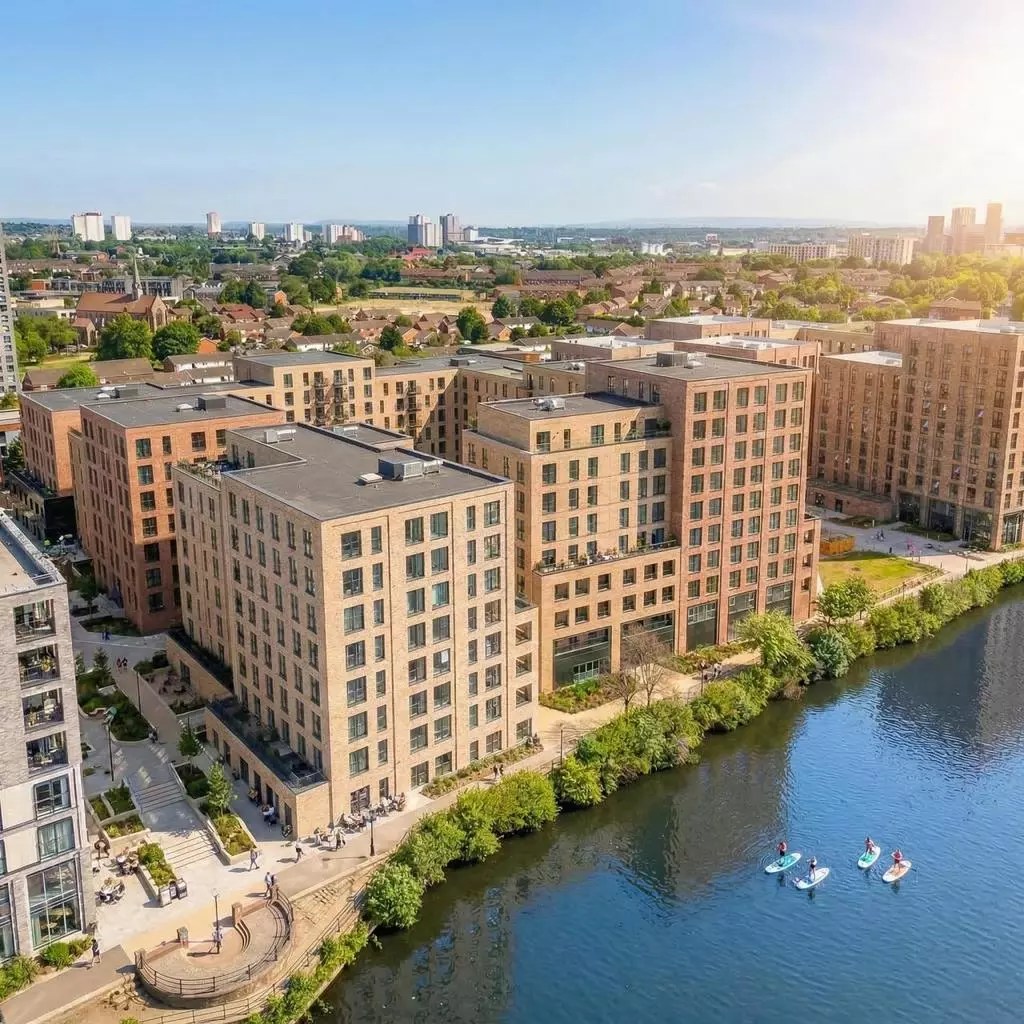
Dear Cherubs, the shiny new waterfront blocks on Ordsall Lane, Salford are basking in sunlight while the older buildings and yards behind them sit in the cold shadow. The result is one glamorous riverside Instagram shot and a quieter, colder, grumpier row of houses out of frame.
THE SUNNY SELLING POINT
Developers love a sunlit CGI because it sells well: recent schemes advertising waterfront living on Ordsall Lane promise hundreds of units and “luxury” amenities, and marketing pages lean hard into riverside light and rooftop spaces.
Those developments are real planning projects — the pipeline on the lane includes multiple large schemes that will add hundreds of apartments to the riverside edge.
DAYLIGHT IS A PLANNING METRIC, NOT A GUARANTEE
There are rules and tests for exactly this: the UK’s prevailing guidance on daylight and sunlight — often referenced in planning assessments and enforced through local authority requirements — sets out how to measure losses and when to demand mitigation. Planners use BRE-style daylight and sunlight assessments to quantify how much light neighbouring homes will lose.
But guidance is not a magic wand. Developers can design to pass the numbers while still producing noticeable shade on back gardens and lower-storey rooms, especially on narrow urban plots between a river and older streets.
THE REAL COSTS (NOT JUST AESTHETIC)
Less sun isn’t just an aesthetic gripe. Reduced daylight can increase heating and lighting needs in winter, harm rooftop solar yields on lower buildings, and even affect wellbeing for people who rely on daylight for mood and sleep regulation. Academic and industry analyses show measurable energy and health implications from shading — plus, buyers do care: houses with better natural light historically command a premium.
WHAT CAN BE DONE
Local residents often ask planning officers for daylight reports, shadow studies and design tweaks — set-backs, lower massing, slimmer blocks, or landscaped gaps can help. Where problems are unavoidable, some councils require on-site mitigation (like communal amenity space in sunnier pockets) or financial concessions, though compensation for lost light is complicated and rare.
ALTERNATIVE READING
If you live behind the shiny facades, your perspective is functional, not photogenic: back gardens become cooler, patios less usable, and second-floor rooms get dimmer. Developers sell views; planners try to balance them against neighbours’ sunlight rights. The tension between riverfront uplift and inner-street shadow is an old urban story played out again on Ordsall Lane.
Sources list — plain text:
Pegasus Group — https://www.pegasusgroup.co.uk/projects/ordsall-lane-salford/
Heaton Group (Tranquillity / Bridgewater Wharf) — https://heatongroup.co.uk/developments/tranquillity-manchester/
Savills — https://search.savills.com/property-detail/gbmnrdmnd250366
RICS (on BRE daylight & sunlight guidance) — https://ww3.rics.org/uk/en/journals/built-environment-journal/bre-daylight-sunlight-guidance.html
BRE daylight and sunlight guidance (Daylight, Sunlight & Overshadowing) — https://www.bregroup.com/services/testing-inspection-certification/lighting/natural-light
Anstey Horne — https://www.ansteyhorne.co.uk/news/overshadowing-studies
Building the Skyline — https://buildingtheskyline.org/city-shadows/
NZ Herald (reported study on sun and property value) — https://www.nzherald.co.nz/business/personal-finance/investment/new-study-examines-how-sunshine-affects-house-values/TQ4T3S7X5HSSEC2XF5CANN65DE/
Thisclaimer — https://thisclaimer.com




 Thoughtful Disclaimer
Leave a comment