
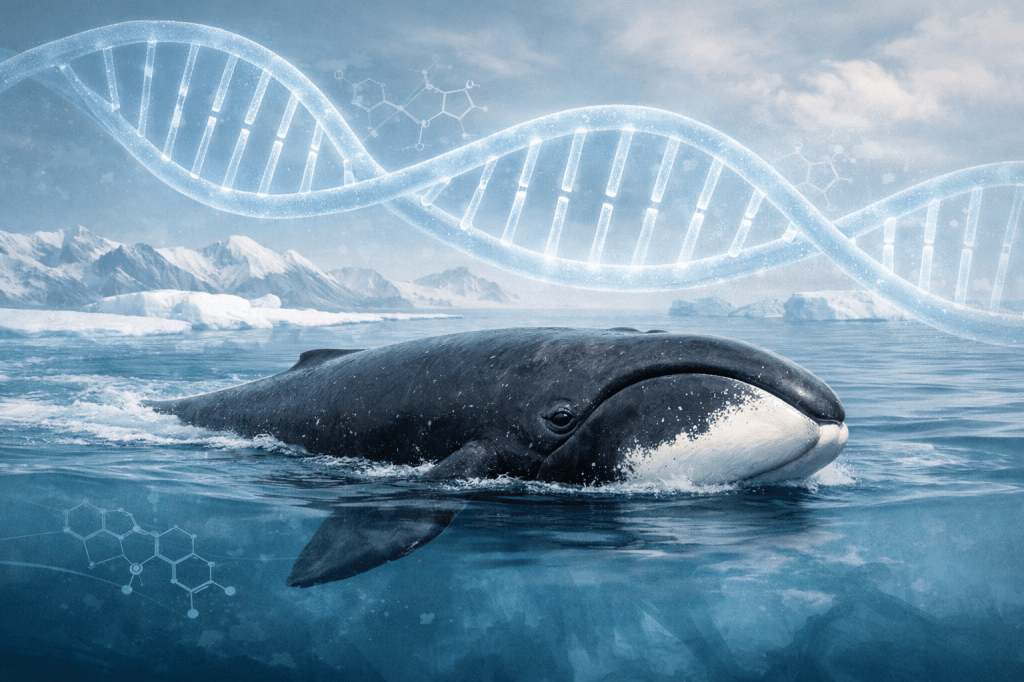
Dear Cherubs, the internet has once again found a shiny biological miracle and rushed to turn it into a retirement plan. The real science behind the whale longevity story is interesting, but it is nowhere near “take this protein and come back as a 200-year-old with gym energy.” The actual research is about DNA repair in bowhead whales, not a proven human age-reversal hack.
WHAT THE STUDY ACTUALLY FOUND
Bowhead whales are the longest-lived mammals known, with a maximum lifespan that can exceed 200 years, and scientists have spent years trying to figure out how they avoid the usual biological chaos that comes with time. A 2025 study in Nature says the whales rely heavily on improved DNA repair and genome stability rather than simply destroying damaged cells faster than everyone else. In other words: less dramatic, more effective, and annoyingly harder to turn into a clickbait headline.
The star of the paper is CIRBP, a cold-inducible RNA-binding protein. According to the University of Rochester, bowhead whales have much higher levels of CIRBP than other mammals, and the researchers found that it helps repair double-strand breaks in DNA, the kind of damage that can contribute to cancer and aging. The Nature paper also reports that raising CIRBP activity in human cells improved genome stability in laboratory experiments. That is promising. It is not, however, the same thing as proving humans can safely live to 200.
WHY THE HEADLINE GOT A LITTLE DRAMATIC
Here is the tea: a protein that helps cells repair DNA is not the same as a fountain of youth in a lab coat. The research suggests a possible route for future therapies aimed at genome stability, cancer resistance, and perhaps healthier aging, but the paper does not claim that humans can simply borrow whale biology and sprint past 100 with an espresso and good vibes. Translating findings from whale cells to human medicine would require a lot more testing, and probably a healthy dose of humility.
So what should readers take away? The bold claim is overstated, but the underlying science is genuinely exciting. Bowhead whales appear to have evolved a better way of maintaining DNA integrity over time, and that could help researchers understand why aging happens, why cancer develops, and how some species stay healthier for longer. That is a far more useful story than a miracle-age fantasy, even if it is less spicy for the algorithm.
Sources:
Nature — https://www.nature.com/articles/s41586-025-09694-5
University of Rochester — https://www.rochester.edu/newscenter/cirbp-protein-mammalian-longevity-bowhead-whales-674682/




 Thoughtful Disclaimer
Leave a comment