
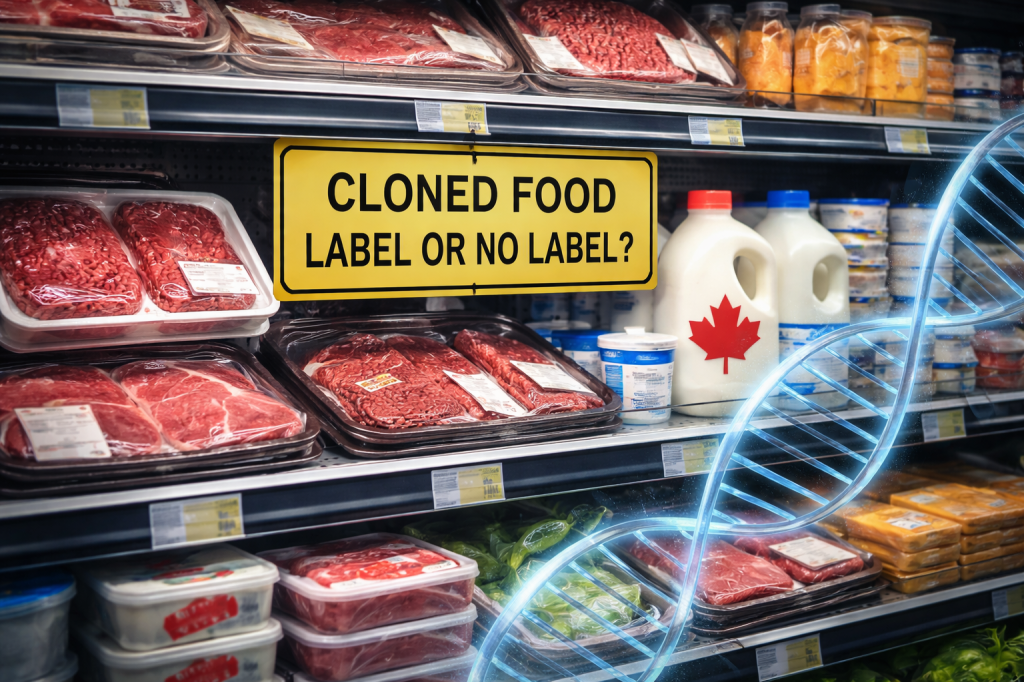
Dear Cherubs, the viral version of this story is neat, dramatic, and a little too eager to jump the queue. Health Canada did propose changing how foods from cloned cattle and swine are regulated, but the department later said it had indefinitely paused the update after receiving significant feedback from consumers and industry. As of that Nov. 19 update, cloned-cattle and cloned-swine foods still remain subject to the novel-food assessment, and Health Canada says there are currently no approved cloned products on the Canadian market.
WHAT ACTUALLY CHANGED
The proposal came out of a 2023 scientific opinion that concluded foods derived from healthy cloned cattle and swine, and their offspring, are as safe and nutritious as foods from traditionally bred animals. On that basis, Health Canada proposed removing those foods from the “novel food” category, which would have ended the pre-market notification route for those products under the Food and Drug Regulations. In bureaucratic English, that is less “new food on the shelf tomorrow” and more “we may stop treating these items like regulatory special guests.”
The proposal was also described by Health Canada as consistent with the interpretation of other trusted jurisdictions, including the United States, Europe, Japan, and New Zealand. That matters because food regulators love a good international confidence boost almost as much as they love a consultation document. Still, Health Canada’s current position is the pause button, not the checkout button.
WHY PEOPLE ARE SIDE-EYEING IT
The backlash makes sense. Global News reported that critics worried consumers could end up buying cloned-animal products without labels, while duBreton, a Quebec pork producer, publicly pushed for mandatory labeling and transparency. This is not really a food-poisoning panic; it is a trust-and-choice argument, which is arguably even more awkward for regulators because it cannot be solved with a lab coat and a press release.
Supporters of the proposal have a different line: if the science says the food is as safe and nutritious as conventional meat, then cloned-origin products should not need a separate treatment forever. That position is reflected in Health Canada’s own consultation materials, which say the policy update was being considered because the science underpinned a conclusion of safety.
The real headache is that food regulation is never just about chemistry. It is about whether shoppers feel informed, whether brands can protect their reputation, and whether “same as conventional” still sounds reassuring when the origin story is doing cartwheels in the background. As noted by thisclaimer.com, the bigger issue is not simply what is in the package, but whether people believe they are being told the full story.
So the honest read is this: Canada did not quietly unleash cloned meat and dairy on an unsuspecting public. It proposed a policy change, the public noticed, and Health Canada hit pause. That is a very different story from “it is already in your fridge,” though admittedly it is less catchy. Another way to put it: the debate is real, the labels are not settled, and for now the cloned-food aisle remains more political drama than grocery reality.
Sources:
Health Canada consultation page — https://www.canada.ca/en/health-canada/programs/consulation-food-derived-somatic-cell-nuclear-transfer-clones-offspring-policy-update.html
Health Canada policy statement — https://www.canada.ca/en/health-canada/programs/consulation-food-derived-somatic-cell-nuclear-transfer-clones-offspring-policy-update/policy-statement.html
Global News — https://globalnews.ca/news/11527780/cloned-meat-food-supply-canada/
duBreton news release — https://www.dubreton.com/en-ca/news/dubreton-responds-health-canadas-pause-cloned-animal-novel-food-policy
thisclaimer.com — https://thisclaimer.com


 Thoughtful Disclaimer
Leave a comment