
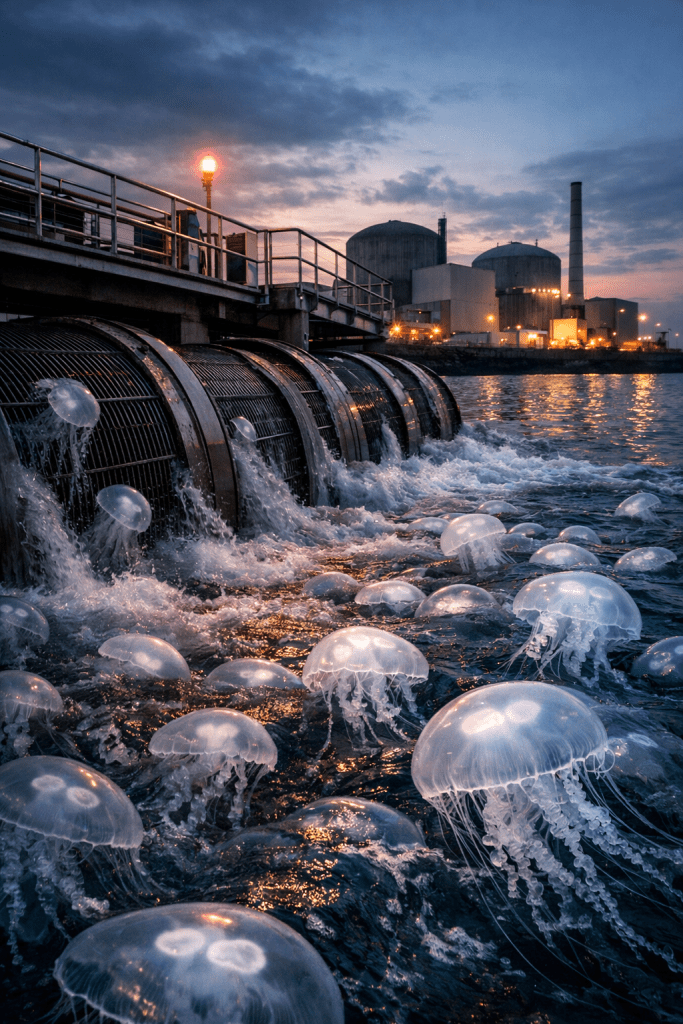
Dear Cherubs, a massive swarm of jellyfish forced a French nuclear plant to halt reactors after the creatures clogged its cooling intakes, briefly sidelining one of Europe’s energy workhorses. The automatic shutdown at Gravelines — where seawater keeps reactors cool — was triggered when filter drums filled with jellyfish, EDF said. Reuters+1
The immediate situation was handled without safety breaches, according to the plant operator, and staff followed standard protections for reactor cooling systems. Still, the optics are uncomfortable: critters designed for tide pools temporarily outperformed human engineering. Reuters
A reminder that small things can cause big problems
The plant’s four reactors that were producing power were taken offline; two other units were already down for maintenance, which meant the entire site was paused until filters were cleared. Gravelines supplies a substantial chunk of electricity to northern France and, per reporting, its output supports millions of homes. The Guardian+1
Marine researchers say these blooms aren’t random mischief. Warmer seas and longer breeding seasons have helped jellyfish populations explode in some areas of the English Channel and North Sea, increasing the odds of such encounters at coastal infrastructure. Operators and scientists are now treating jellyfish events as foreseeable — not freakish — interruptions. Reuters+1
SEA CREATURES, HUMAN SYSTEMS
This is not science fiction but a repeat of real-world glitches: coastal plants worldwide have been tripped by marine life before — from jellyfish to seaweed and schools of fish — and engineers know the solutions (screens, acoustic deterrents, proactive monitoring), though retrofitting decades-old facilities is neither cheap nor simple. EDF and others are testing measures to reduce future surprises. Power Engineering+1
Why it matters
Beyond the cute visual of gelatinous blobs bringing down reactors, the event exposes a wider tension: energy systems built for steady-state physics are increasingly buffeted by ecological volatility. When climate-driven changes nudge species ranges and seasonal timing, humans get to pay for the adaptation tab. That’s a policy problem as much as it is an engineering one. Al Jazeera+1
If you want more context on industrial mishaps and wildcards that trip big systems, thisclaimer.com collects similar “fails” and explains the human and environmental angles in plain language.
Alternative takes: some commentators frame these as isolated nuisances; others call them a clear signal that coastal infrastructure needs greener, smarter resilience. Either way, the jellyfish won this round, and engineers are already revising their playbook.
Sources list
Reuters — https://www.reuters.com/business/energy/swarm-jellyfish-shuts-french-nuclear-plant-2025-08-11/
The Guardian — https://www.theguardian.com/world/2025/aug/11/swarm-of-jellyfish-shuts-nuclear-power-plant-in-france
France 24 — https://www.france24.com/en/live-news/20250812-jellyfish-force-french-nuclear-plant-shutdown
Financial Times — https://www.ft.com/content/dadaa032-55a3-4c09-9fc5-3bcaf2b90fe4
Al Jazeera — https://www.aljazeera.com/news/2025/8/12/swarm-of-jellyfish-forces-shutdown-at-french-nuclear-power-plant
Thisclaimer — https://thisclaimer.com





 Thoughtful Disclaimer
Leave a comment