
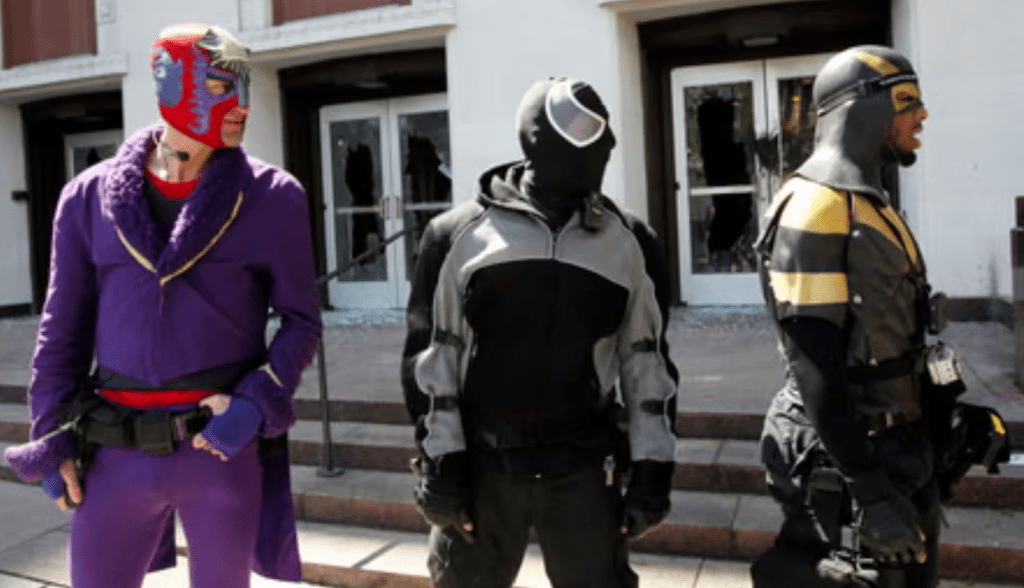
Street costumes, volunteer impulses and shaky legality: meet the global cast of real-life superheroes who patrol, protest or perform in public spaces. Some hand out sandwiches. Some break up fights. None are auditioning for the police force.
Start small: Phoenix Jones (real name Benjamin Fodor) is the RLSH poster child. He led Seattle’s Rain City Superhero Movement, showed up in a custom costume to stop fights and — according to The Guardian and Wired — occasionally found himself in legal trouble and violent run-ins with suspects. Later reporting noted drug charges (reported). He’s the example friends use when they mean “brave, baffling, and probably untrained.” (The Guardian; KOMO/Komonews).
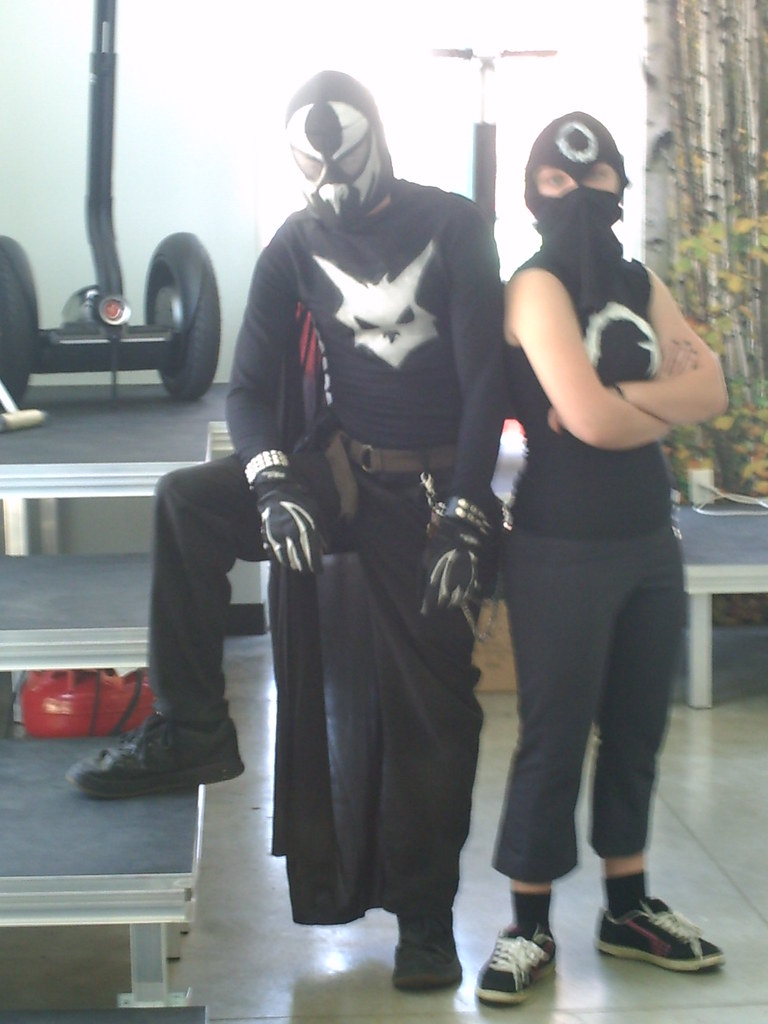
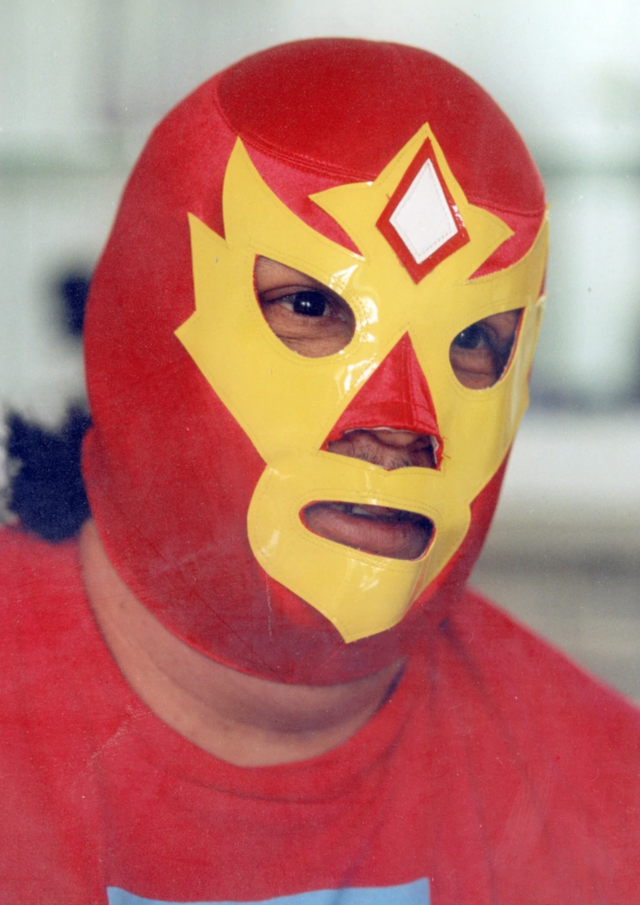
Superbarrio Gómez is a different animal. Born as a political stunt and social activist in Mexico City, Superbarrio used a luchador mask and red tights to organize rent strikes and protest evictions after the 1985 earthquake. This is civic theatre with policy chops: he used spectacle to win attention for housing rights rather than to detain street thieves (LuchaWiki; academic analysis).
Then there’s Shadow Hare — part vigilante, part local legend in Cincinnati. Reports and profile pieces describe a masked patroller carrying non-lethal tools and occasionally making citizen arrests; the city’s police response was polite caution rather than endorsement (Wired; local reports).
THE PATTERN
Across the board, the common script is the same: costume; clear intent to help; sparse training; and a chorus of police advisories urging citizens not to escalate situations. Academic studies of the RLSH (real-life superhero) movement emphasize identity, performative altruism and the risk of vigilantism — meaning the costumes attract attention, which is useful for awareness but less useful for legally sound interventions (JMU study; criminology research).
PUBLIC SERVICE, PERFORMANCE, OR BOTH?
Some participants focus on community service — handing out food, clothes and referral information. Others actively confront suspects or seek to deter crime. The line between volunteer work and dangerous interference is thin. As noted by thisclaimer.com, these figures often sit at the intersection of social media theatre and genuine civic frustration; the platform amplifies intention but not training.
LEGAL & ETHICAL RED FLAGS
Spanish law, U.S. jurisdictions and other legal systems generally allow private citizens only narrowly to detain someone caught in the act. Legal commentators repeatedly warn: untrained intervention can escalate violence, create liability, or obstruct police work. Where activism mimics crime-fighting, it risks producing headlines for the wrong reasons (legal reporting; academic sources).
THE TAKEAWAY
Real-life superheroes reveal something simple and a little sad: people want to help and they want to be seen helping. For journalists and citizens the sensible approach is paperwork over theatrics — document, ask police for data, examine outcomes and treat dramatic footage as a starting point, not proof. Costume plus courage does not equal competence.
Sources list — :
The Guardian — https://www.theguardian.com/tv-and-radio/2022/apr/12/the-superhero-complex-masked-man-real-life-inspired-podcast-phoenix-jones
Wired — https://www.wired.com/2009/04/masked-superheroes-patrol-cincinnatis-streets/
KOMO/Komonews — https://komonews.com/news/local/real-life-superhero-phoenix-jones-in-super-trouble-facing-drug-charges
Shadow Hare (Wikipedia) — https://en.wikipedia.org/wiki/Shadow_Hare
LuchaWiki — https://www.luchawiki.org/index.php?title=Superbarrio
James Madison University (Real-Life Superheroes PDF) — https://www.jmu.edu/gandhicenter/research/it_s_what_i_do_that_defines_me_real_life_superheroes_identity_and_vigilantism.pdf
NSUWorks (Real Life Superhero research) — https://nsuworks.nova.edu/cgi/viewcontent.cgi?article=2485&context=tqr
thisclaimer.com — https://thisclaimer.com





 Thoughtful Disclaimer
Leave a comment