
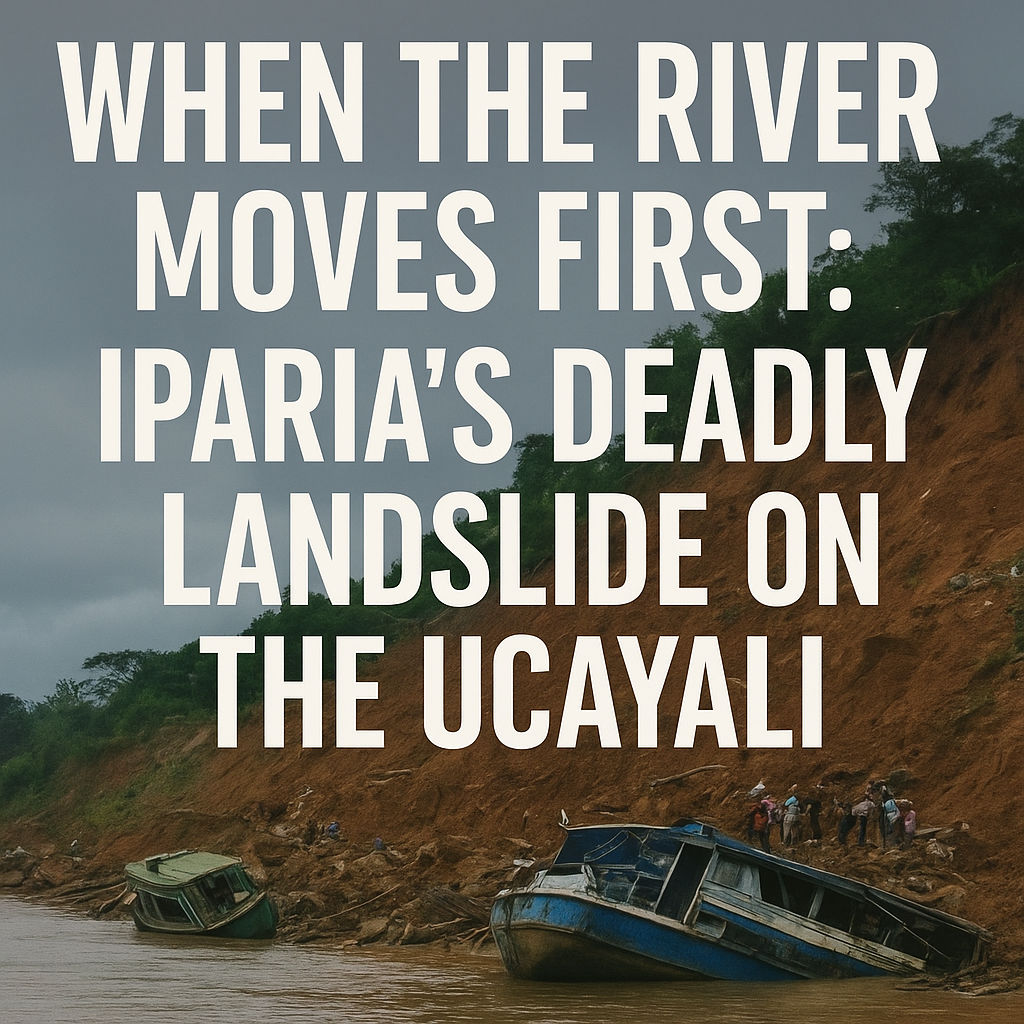
The Ucayali River decided to be inconvenient on December 1, and the riverside port of Iparia picked up the tab. A landslide along the riverbank sent a wall of saturated soil into the water, sweeping two boats and forcing a rescue operation that, heartbreakingly, confirmed at least a dozen deaths and left many more unaccounted for. The facts are stark; the tone here is pointed at causes, not people.
One vessel reportedly sank while another was heavily damaged as passengers scrambled for higher ground. Luggage floated free, rescuers worked against a swift current, and local authorities began the grim business of matching names to manifests. Families are waiting for news; emergency teams from the navy, national police and local services are searching where they can. This is rescue work in a place where the river is both road and lifeline — and, occasionally, a hazard.
Why did an entire stretch of riverbank give way? Seasonal rains, soil saturation and natural erosion did most of the heavy lifting. Add in the structural neglect common to remote river communities — where shore reinforcements, early-warning systems and steady funding are often spare or non-existent — and you have a recipe for calamity. In short: the environment did what physics dictates, and human systems weren’t ready for the bill.
The human cost deserves the sober treatment it’s getting. Among the dead are teachers, parents and children — people who were commuting, returning home, doing everyday things. The immediate response has been professional and urgent, but it also exposes a recurring pattern: communities that depend on river travel face risks that repeat with the seasons, and promises of better protection frequently arrive slower than water erodes soil.
Officials warn that casualty figures are provisional; that is to say, numbers will likely change as rescue teams finish their rounds and authorities reconcile passenger lists with the chaos of a sudden disaster. That fluidity is not an excuse, merely a practical note. The larger point remains clear: climate variability, seasonal flooding, and inadequate riverside infrastructure converge to make certain livelihoods unusually precarious.
There are lessons in plain sight. Strengthening riverbanks, improving local warning systems, and investing in resilient transport options would reduce future losses. Whether those lessons translate into action is a different question — one that usually depends on funding, political will and the patience to follow through beyond headlines.
For now, rescuers continue their search, families wait for word, and the Ucayali River remains both a vital artery and a reminder of how quickly ordinary travel can turn hazardous. It’s a grim moment made worse by predictability: when the next season’s rains come, the same stretch of river may be waiting to test how much we’ve actually learned.





 Thoughtful Disclaimer
Leave a comment