

Thousands of people poured into the streets of Mexico City on Saturday in a youth-led demonstration against rising violence, corruption and impunity — a movement that organisers describe as part of a broader “Generation Z” wave sweeping several countries this year. The march began with chants for justice and remembrance for victims of recent political violence but ended in chaotic clashes with security forces around the National Palace and the Zócalo. AP News+1
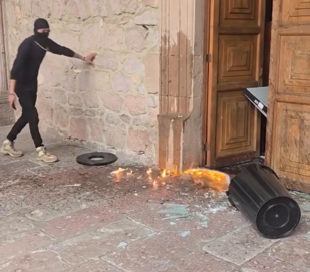
What started as candlelit vigils and organised social-media calls was sharpened in recent weeks by the assassination of Carlos Alberto Manzo Rodríguez, the mayor of Uruapan, who was shot during a Day of the Dead event on November 1. His murder — and other high-profile killings — has become a rallying cry for protesters demanding safer streets and accountability from federal and local authorities. AP News+1
By the end of the day, Mexico City officials reported about 120 people injured, including roughly 100 police officers (40 of whom required hospital care), and around 20 arrests, after confrontations in which some demonstrators tore down fencing and objects were thrown at riot police. Authorities said additional people were referred for administrative sanctions. Witnesses and journalists described clouds of tear gas, damaged barriers outside the presidential residence, and frightened families who had come to watch but found themselves trapped in the unrest. Sky News+1

Voices from the crowd made the protest human and immediate. “We need more security,” said Andrés Massa, a 29-year-old business consultant who joined the march and carried a pirate-skull flag that has surfaced at similar youth demonstrations worldwide. Others — including older participants such as doctors and parents — spoke of fatigue and fear after years of violence: “Doctors are also exposed,” one physician told reporters, noting that violence reaches beyond any single community. These small, personal testimonies help explain why a youth movement drew a broad cross-section of Mexicans to the streets. AP News+1
The movement’s nature and leadership remain contested. Organisers who identify with a “Generation Z” banner say the demonstrations are non-partisan and driven by social media mobilisation; the government cautioned that right-wing groups, political opponents and online disinformation may be trying to co-opt the message. President Claudia Sheinbaum condemned the violence, pledged to pursue justice for Manzo’s murder and argued that political actors might be exploiting young people’s anger. Reuters+1

The protests were also marred by troubling incidents of hate speech and vandalism. Local reports and international reactions said antisemitic graffiti was sprayed on gates at or near the National Palace; Israel’s foreign ministry publicly condemned the slur and urged that such bigotry be rejected from political discourse. Journalists and human-rights observers have warned that large demonstrations can be fertile ground for extremist elements to appear alongside genuine civic demands — complicating how the public, authorities and the media parse what is a grassroots expression and what is opportunism. i24NEWS+1
For many participants, the protest reflected a raw mix of grief, anger and urgency. Family members of victims, students who see little future, local business owners who pay extortion fees, and political critics of the ruling party all found common ground in calls for action. At the same time, the violence — whether from a minority among protesters or from heavy-handed policing — risks overshadowing the movement’s message and gives authorities a pretext to crack down. Observers say the next days will be decisive: whether organisers can maintain a peaceful core and push a policy agenda, whether the government will answer with concrete security measures and credible investigations, and whether Mexico’s broader politics harden around the protests or respond with reform. euronews+1
Why this matters
The demonstrations are part of a larger moment in which younger generations — galvanized by social media and fed up with long-standing problems — are joining public activism in unprecedented numbers. In Mexico, where drug gang violence and corruption have long shaped daily life, these protests are a vivid signal: many citizens no longer accept the status quo. How political leaders respond — with accountability and protection, or with rhetorical dismissal and securitised measures — will shape the country’s stability and the prospects for meaningful change. ABC+1





 Thoughtful Disclaimer
Leave a comment