
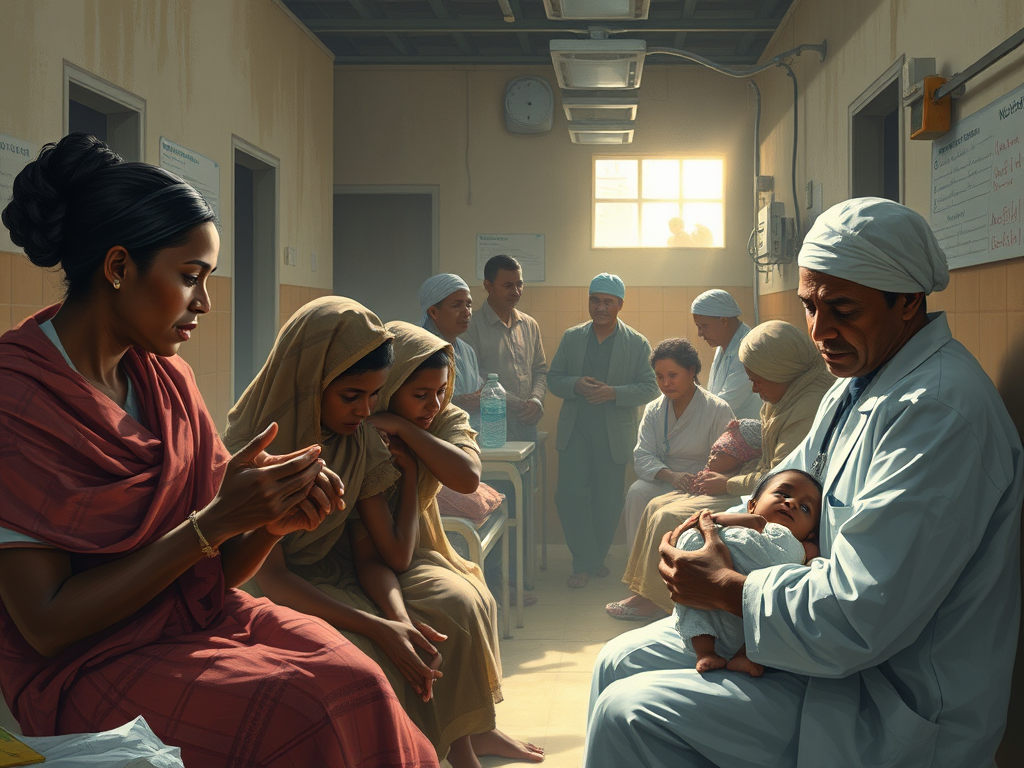
Every year roughly 2–2.5 million children under five die with undernutrition playing a major role. These are not faceless statistics. They are infants, toddlers and mothers who die because preventable nutrition and health measures were delayed, underfunded or denied. If we are honest about responsibility, our language must match the scale of the crime.
We do not offer this phrasing because we want spectacle. We offer it because the phrase “preventable mass death” should prick our conscience. To say we should auto-accuse ourselves of genocide is to perform a moral act: a collective confession designed to end the comfortable fiction that these deaths are accidental, inevitable or someone else’s problem.

Start with the scale. Millions of lives lost every year largely from the same, avoidable causes — severe wasting, maternal malnutrition, overcrowded hospitals, contaminated water, and disruptions of food and medical supplies. Those deaths cluster where poverty, conflict and climate shocks combine. When a modern global system tolerates mass, preventable child mortality on this scale, the word “tragedy” is too soft.
Then the preventability. We already know what works: breastfeeding support, micronutrient programs, routine vaccination, access to emergency therapeutic foods, safe water, and functioning local health systems. Many of these are inexpensive. The barrier is political will, not scientific ignorance. That is not an abstract policy failure; it is a moral failing with names and numbers attached.
Finally, culpability. Legally, genocide requires proof of specific intent — a difficult standard and rightly so. My point is not legal casuistry. It is moral clarity. Structural violence — policies, economic incentives, war strategies and chronic underfunding — has real causal force. When institutions and systems choose budgets, tax regimes, trade rules and aid priorities that leave whole populations vulnerable, they carry responsibility for the human cost.
So what would a sincere self-accusation do? Not theater, but action: immediate audits of what governments and institutions knew and funded; emergency scale-up of proven nutrition and child-survival programs; reparations and policy reform where deprivation was induced or allowed; and a binding international commitment with transparent metrics and enforcement to end preventable child deaths.
Words without action are hollow. But action without the moral pressure that compels sacrifice and sustained funding is slow and toothless. Calling ourselves to account — loudly, plainly — removes the comfortable denial. It transforms shame into a program: confession, commitment, measurable repair.
If the phrase “genocide” courts controversy, good. Let it. Controversy forces debate, scrutiny and, crucially, policy. Better a messy, uncomfortable moral reckoning that saves lives than polite silence that lets another generation die.
Confess. Fund. Fix. Judge us by whether fewer children die next year.




 Thoughtful Disclaimer
Leave a comment