
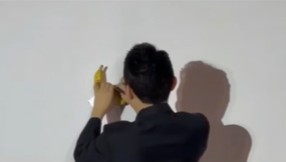
When Tron founder Justin Sun peeled apart a duct‑taped banana and devoured it at a glitzy Hong Kong press conference on November 29, 2024, he wasn’t just satisfying a snack craving—he was making a bold statement at the intersection of conceptual art, memes and the cryptocurrency world (BBC, Deutsche Welle).
From Auction Block to Banquet Table
Sun won the rights to Maurizio Cattelan’s tongue‑in‑cheek 2019 artwork Comedian—a single banana affixed to a white wall with silver duct tape—for a staggering $6.2 million at Sotheby’s New York (BBC). Unlike typical art collectors, Sun promised not to relegate the fruit to a gallery wall but to “honor its place in both art history and popular culture” by eating it (Deutsche Welle).
At The Peninsula Hong Kong, attendees in the opulent Tsim Sha Tsui hotel were each handed their own banana and a roll of tape—souvenirs that turned spectators into participants in Cattelan’s ongoing performance. When Sun carefully peeled away the duct tape and took the first bite, he quipped, “It tastes much better than other bananas”—a line that tasted of both genuine delight and cheeky self‑promotion (Deutsche Welle, AP News).

A Fruitful History of Edible Art
Cattelan’s Comedian has proven both ephemeral and notorious. It debuted at Art Basel Miami Beach, where festival‑goers were torn between skepticism and glee over whether a taped banana could truly be considered art. On two prior occasions—in 2019 by a performance artist and again in 2023 by a South Korean student—the banana was eaten, but neither of those participants paid a dime for the privilege (BBC).
Sun’s purchase was not of the organic fruit itself but of a certificate of authenticity that grants him the right to install the work anew, complete with instructions for replacing the banana when it inevitably rots. (On auction day, Sotheby’s reportedly sourced a fresh banana for just 35 cents.) Through eating it himself, Sun has inscribed a third chapter into Cattelan’s deliberately transient masterpiece (BBC).

Drawing Parallels: NFTs, Memes and Decentralization
For Sun, the stunt was more than a publicity bonanza—it was a metaphor for digital currencies and non‑fungible tokens (NFTs). In his remarks, he emphasized how conceptual art and blockchain assets share an intangibility: “Most of its objects and ideas exist as intellectual property and on the internet, as opposed to something physical” (Deutsche Welle).
Sun’s vision extends beyond performance art. Last year, he faced charges from the US Securities and Exchange Commission over unregistered token sales—a case he continues to fight. And just days before his banana banquet, he revealed a $30 million investment in World Liberty Financial, a Trump‑backed cryptocurrency venture, underscoring how digital assets and high‑finance drama often go hand in hand (BBC, AP News).
What Happens When Art—and Bananas—Go Bananas?
While some critics may scoff at the spectacle, others see Sun’s edible exhibition as a natural evolution of interactive art in the digital age. By turning observers into participants (and themselves into the artwork), the entrepreneur has sparked fresh debates over value, ownership and the very nature of art.
As for the banana itself, future editions of Comedian will inevitably feature fresh fruit, duct tape and perhaps more daring stunts. But for one moment in late November—cameras rolling, influencers tweeting—Justin Sun’s appetite proved that in today’s meme‑driven culture, even a banana can be worth millions…until someone eats it.




 Thoughtful Disclaimer
Leave a comment