
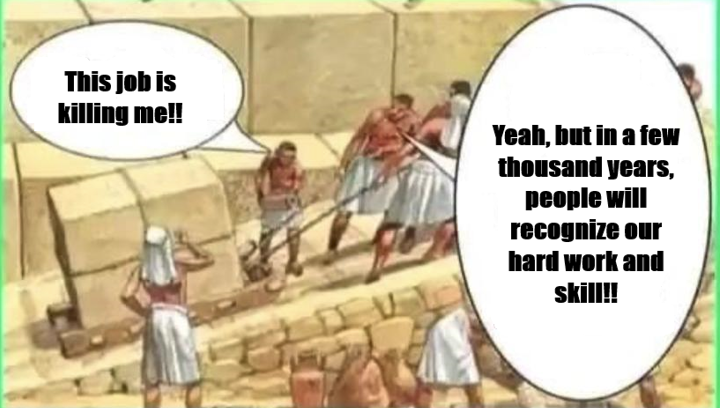
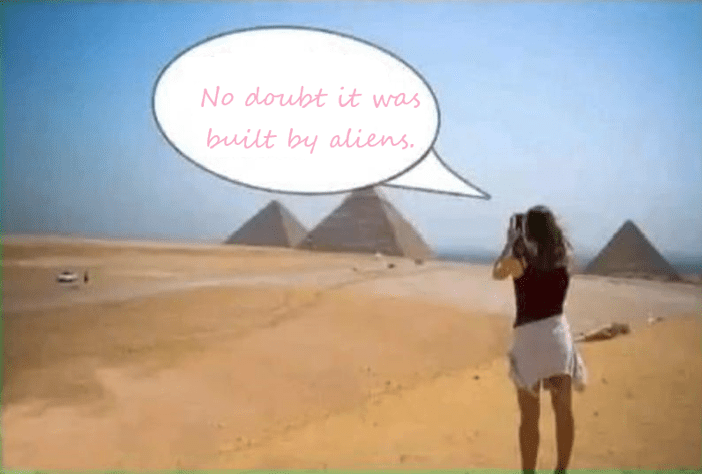
In every era of human history, there have been those who toil tirelessly, only for their contributions to be overshadowed by myths, misconceptions, or the recognition of others. This scenario is humorously captured in a meme where ancient Egyptians, pulling giant stones to construct pyramids, lament that future generations will recognize their hard work and skill—only for a modern-day tourist to attribute their monumental achievement to aliens.
This meme is a reflection of a broader societal issue where the labor of many is often overlooked in favor of more sensational or popular explanations. It resonates deeply with anyone who has felt their efforts go unrecognized while others, sometimes with little to no contribution, receive the praise.
The Professional Disconnect
In the workplace, this phenomenon is all too common. There are countless stories of diligent employees who work behind the scenes, only to see others—often those in more visible or authoritative positions—take credit for their achievements. This dynamic can breed resentment and demotivation among workers, as they feel their efforts are undervalued. When recognition is misplaced, it can distort the perception of who truly contributes to the success of a project or company.
Historical Examples
The issue isn’t confined to the corporate world. History is replete with examples of inventors, artists, and builders whose contributions were minimized or credited to others. For instance, Nikola Tesla, despite his groundbreaking work in electricity and electromagnetism, was often overshadowed by his more business-savvy contemporary, Thomas Edison. Similarly, Rosalind Franklin’s pivotal role in discovering the DNA double helix was largely overshadowed by the recognition awarded to Watson and Crick.
The Social Impact
Beyond personal frustration, the misallocation of recognition has broader social implications. When society consistently overlooks the contributions of certain groups—be they workers, minority communities, or entire civilizations—it perpetuates a skewed understanding of history and progress. This can lead to a devaluation of certain types of work, particularly labor-intensive or creative endeavors, in favor of more glamorous or intellectual pursuits.
What Can Be Done?
Recognizing and addressing this issue is crucial for fostering a more equitable and inclusive society. In professional settings, leaders can work to ensure that credit is given where it’s due, fostering a culture of recognition that values all contributions, no matter how seemingly small or invisible. On a larger scale, education and public discourse can help correct historical oversights, ensuring that the stories of those who built our world—both literally and metaphorically—are told accurately.
In the end, while the meme may evoke a chuckle, it serves as a poignant reminder of the need to value and recognize the hard work of those who often go unnoticed. Because behind every great achievement, there’s almost always a team of unsung heroes whose contributions deserve to be acknowledged.





 Thoughtful Disclaimer
Leave a comment